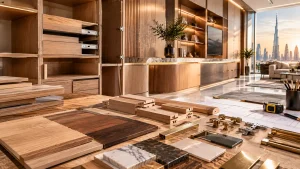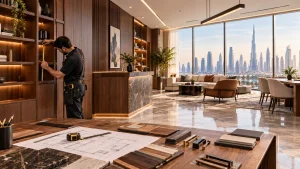
You have the design ready. Maybe it is kitchen cabinets for a villa or a reception desk for a new office. Now comes the part that decides whether the finished room looks like the render or like a compromise: choosing who builds it.
Dubai has no shortage of joinery workshops. Some are excellent. Others subcontract everything, or quote low and then send variations every week. From the outside, they look almost identical.
This guide explains how to choose a joinery contractor in Dubai without guesswork. It walks through what actually separates a reliable joinery company in Dubai from one that will cost you time and money, so you can use it as a checklist before you sign anything.
Why the Choice Matters More Than the Price
Joinery sits near the end of most projects, so delays here hit hardest. If the wardrobes arrive three weeks late, the handover moves. If the cabinet doors warp after one summer, you pay twice.
The quote shows the cost on day one. The real cost shows up later, in how panels handle humidity and whether anyone answers when something needs adjusting. A slightly higher quote from a team that controls its own workshop often works out cheaper long term.
1. Do They Actually Manufacture In-House?
This is the first question to ask, and the most revealing. Many businesses that sell custom joinery are really design and sales offices. They take your order, pass it to a third-party workshop and manage the relationship in between.
That is not always a problem, but it usually means:
- Less control over material quality and finishing
- Longer lead times, because your job sits in someone else’s queue
- Slower fixes, since every conversation has an extra layer
Ask to visit the factory. A team that runs its own production floor will be happy to show you the machinery, the spray booth and jobs in progress. If the visit keeps getting postponed, take note.
2. Look at Finished Work, Not Just Renders
Anyone can produce a beautiful 3D render. You want to see work that has been installed and used.
Ask for:
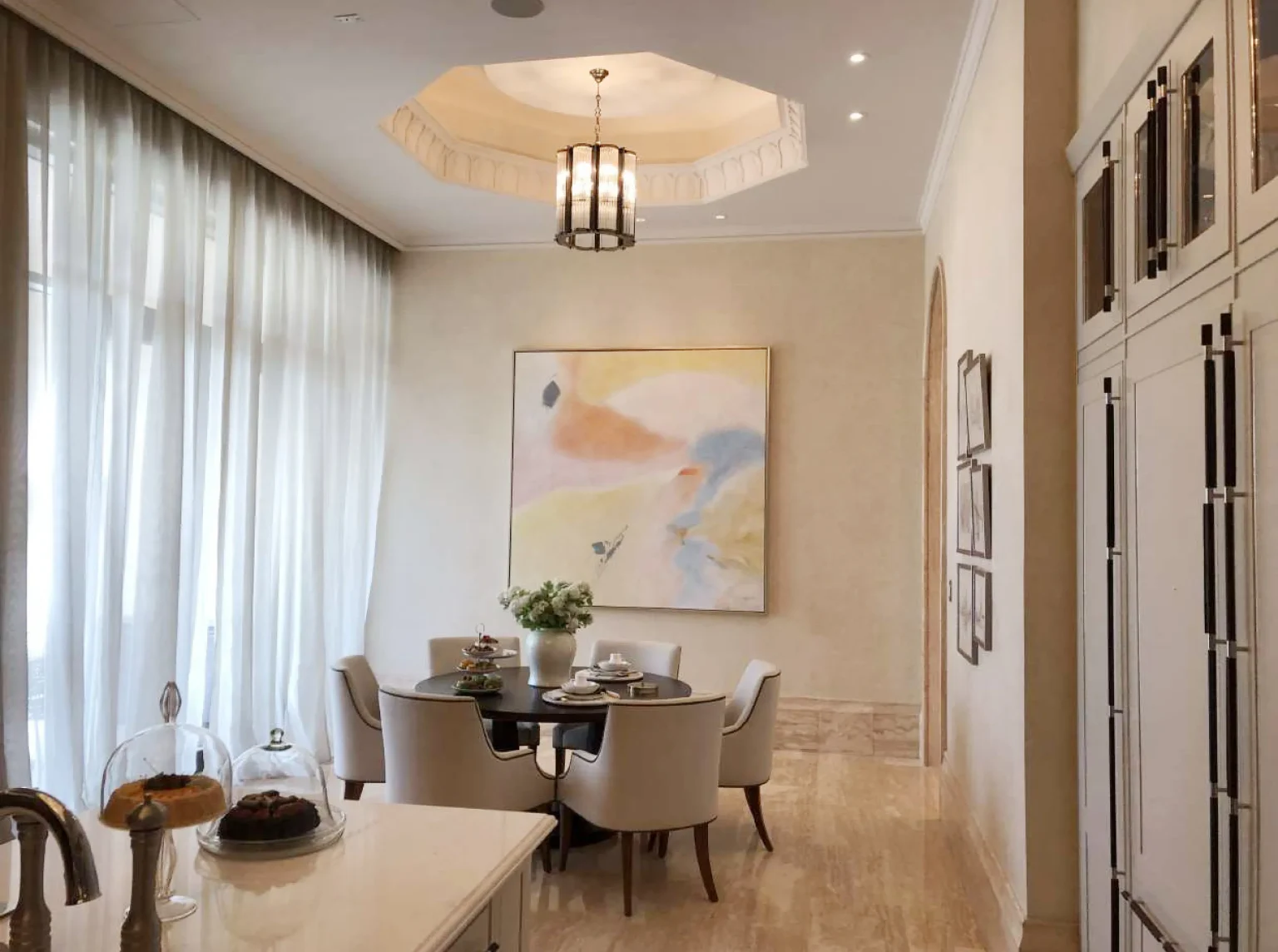
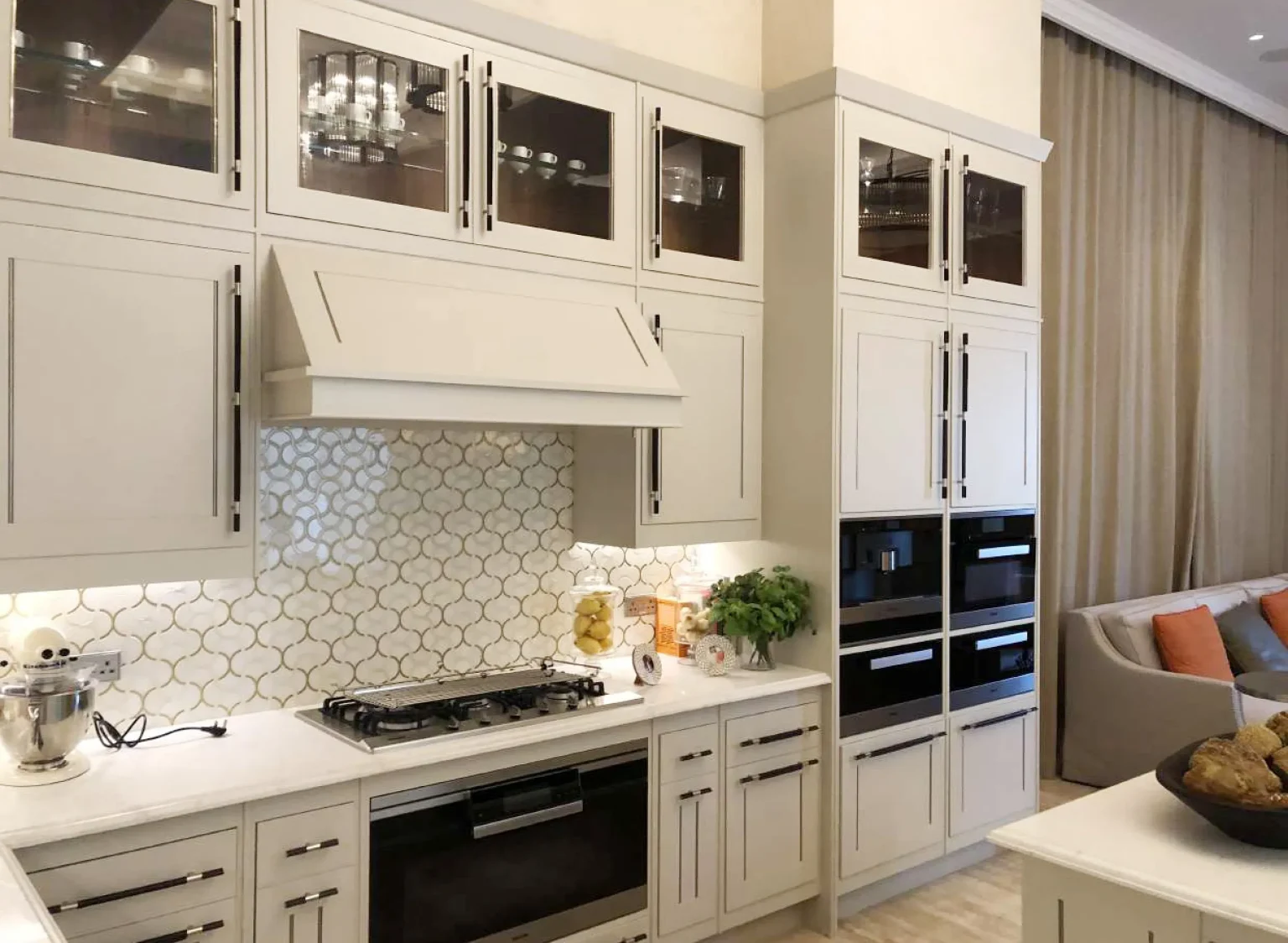
- Photos of completed projects, ideally close-ups of edges, joints and hardware
- Past clients you can speak to, with their permission
- Projects similar to yours in size and type, because a team that does great home wardrobes may not be set up for a 40-desk office
When you look at photos, zoom in. Check whether the grain lines up across doors, whether the edge banding is clean and whether the gaps between doors are even.
3. Ask What Materials They Use and Why
In Dubai, material choice is not only about looks. Heat, humidity and constant air conditioning put real stress on wood-based panels, and kitchens and bathrooms take the worst of it.
A good joiner should be able to explain in plain language why they recommend:
- Moisture-resistant MDF or marine plywood for wet areas
- Solid wood or veneer for a particular piece
- A specific finish, such as lacquer, veneer or high-pressure laminate, based on how the surface will be used
- Particular hardware brands for hinges, runners and handles
If every answer is “don’t worry, we use the best,” push for specifics. It also helps when the team works with a dependable building materials supplier in the UAE, because consistent board quality means fewer surprises halfway through production.
For commercial spaces, ask whether the materials meet the fire-rating requirements for your building. It is much easier to get right at the start.
4. Check How They Handle Drawings and Approvals
The best joinery projects are settled on paper before a single panel is cut. Ask how the team moves from your design to production. A professional process usually looks like this:
- Site measurement by their own team, not just your dimensions
- Shop drawings showing every piece with sizes, materials and finishes
- Material and colour samples for your sign-off
- Written approval from you before production starts
Shop drawings are where mistakes get caught cheaply. A socket that clashes with a cabinet back, a door that cannot open past a column, a ceiling that is 20 mm lower than the plan says. If a joinery team skips this step, you find those problems on site, when fixing them costs the most.
On larger projects this stage connects closely with technical planning, especially where joinery has to work around lighting, MEP services and structural elements.
5. Understand Lead Times Before You Commit
Ask for a realistic production and installation timeline in writing, then ask what could push it back. Honest teams will mention material availability, approval delays and site readiness. Be wary of timelines that sound too good, especially for large orders.
It also helps to know how joinery fits into the wider schedule. If you are working with an interior fit out company in Dubai, make sure the joinery installation date lines up with ceilings, flooring and painting. Cabinets installed before the floor is finished, or walls painted after panelling goes up, are common and expensive mistakes.
6. Get a Detailed Quote, Not a Single Number
A one-line quote such as “Kitchen: AED X” makes comparison impossible and leaves room for surprise charges later. A proper quotation should break down:
- Each item or area separately
- Materials and finishes for each item
- Hardware brand and type
- Delivery and installation
- Exclusions, such as countertops, appliances, electrical work or wall preparation
Then you can compare like with like. Often the cheapest quote turns out to use thinner boards, basic hardware or no installation at all.
Check the payment terms too. Staged payments tied to clear milestones, such as drawing approval, production, delivery and installation, protect both sides far better than a large deposit up front.
7. Ask Who Does the Installation
Beautiful joinery can be ruined by a rushed installation. Ask whether the installers are the team’s own staff or hired day labour.
In-house installers know the product, know the finishing standard expected and answer to the people who built the piece. They also tend to protect floors and walls properly, which matters in an occupied home or working office.
8. Warranty and After-Sales Support
Ask directly: what is covered, for how long, and how do I report a problem? A confident manufacturer will give you a clear written warranty on workmanship and hardware.
Response time matters too, because hinges and doors often need adjusting after the first summer. You want a team that treats these visits as part of the job, not a favour.
9. Can They Handle More Than Joinery?
For a single wardrobe or vanity, a specialist joiner is fine. For a villa renovation, a new office or a restaurant, coordination becomes the real challenge. Every extra contractor adds another schedule and another chance for things to slip.
A group that covers joinery, fit-out and, when needed, works as a construction company in Dubai can simplify the whole project. One team answers for the result, and the joinery is designed around the actual site from day one. If you are also furnishing the space, a custom furniture manufacturer in Dubai working alongside the joinery team keeps built-ins and loose furniture matched in material, colour and finish.
Red Flags to Watch For
- No factory or workshop you can visit
- Pressure to pay a large deposit before drawings are approved
- Vague answers about materials and hardware
- No written timeline or warranty
- A quote far below everyone else’s with no clear reason
- Reluctance to share references
Any one of these deserves a follow-up question. Two or three together is usually a sign to walk away.
Frequently Asked Questions
Q1: How much does custom joinery cost in Dubai?
A: It depends on materials, finishes, hardware and complexity. A kitchen in lacquered MDF with standard hardware costs far less than one in wood veneer with premium fittings. The only reliable way to know is an itemised quote based on a proper site measurement.
Q2: How long does a joinery project take?
A: Smaller residential jobs often take a few weeks from drawing approval, while large commercial orders take longer. Ask for a written timeline that covers drawings, production and installation separately.
Q3: What is the difference between a joinery company and a carpenter?
A: A carpenter usually works on site with hand and power tools. A joinery team builds pieces in a workshop with industrial machinery and spray finishing, which gives more precise and consistent results for cabinets, wardrobes and panelling.
Q4: Which material is best for kitchen cabinets in Dubai?
A: Moisture-resistant MDF and marine plywood are popular because they cope well with humidity. The finish on top, whether lacquer, veneer or laminate, affects durability and cleaning just as much as the core board.
Q5: Should I hire a joinery team that also does fit-out?
A: For one or two pieces, a specialist is fine. For a full villa, office or restaurant, one team handling fit-out and joinery reduces delays, clashes and finger-pointing between contractors.
Q6: What should a joinery warranty cover?
A: Workmanship, hardware such as hinges and runners, and defects like warping or delamination under normal use. Get it in writing and ask how service visits are booked.
Planning Joinery in Dubai? Talk to Chihu Group
Whether it is a kitchen, a wardrobe wall, an office reception or a full hotel package, the Chihu Group team can review your drawings, measure the site and give you an itemised quote. Share your plans and we will walk you through materials, timelines and costs before you commit to anything.