“Joinery” gets used loosely across Dubai’s interiors market, often interchangeably with carpentry, cabinetry, and custom furniture. They are not the same trade, and knowing the difference affects who you should actually be hiring for a wardrobe, a reception counter, or a full office fit-out. This guide explains what custom joinery Dubai actually covers, how the process works, what it costs, and what approvals apply when the work moves from a villa to a commercial unit.
What Is Joinery, and How Is It Different From Carpentry?
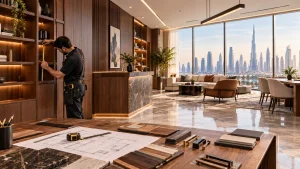
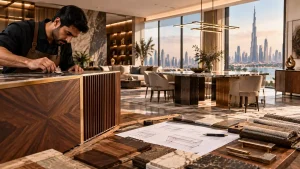
Joinery refers to precision-built woodwork, wardrobes, kitchen cabinets, wall paneling, and storage units, that is fabricated offsite in a workshop and then installed on-site. Carpentry, by contrast, typically covers larger-scale, on-site construction and repair work such as framing, structural timber fixtures, and general wood repairs. A joiner works to exact millimetre measurements taken from the actual space, cutting and assembling components under controlled workshop conditions before final installation, while custom carpentry Dubai work is usually built and adjusted directly on-site.
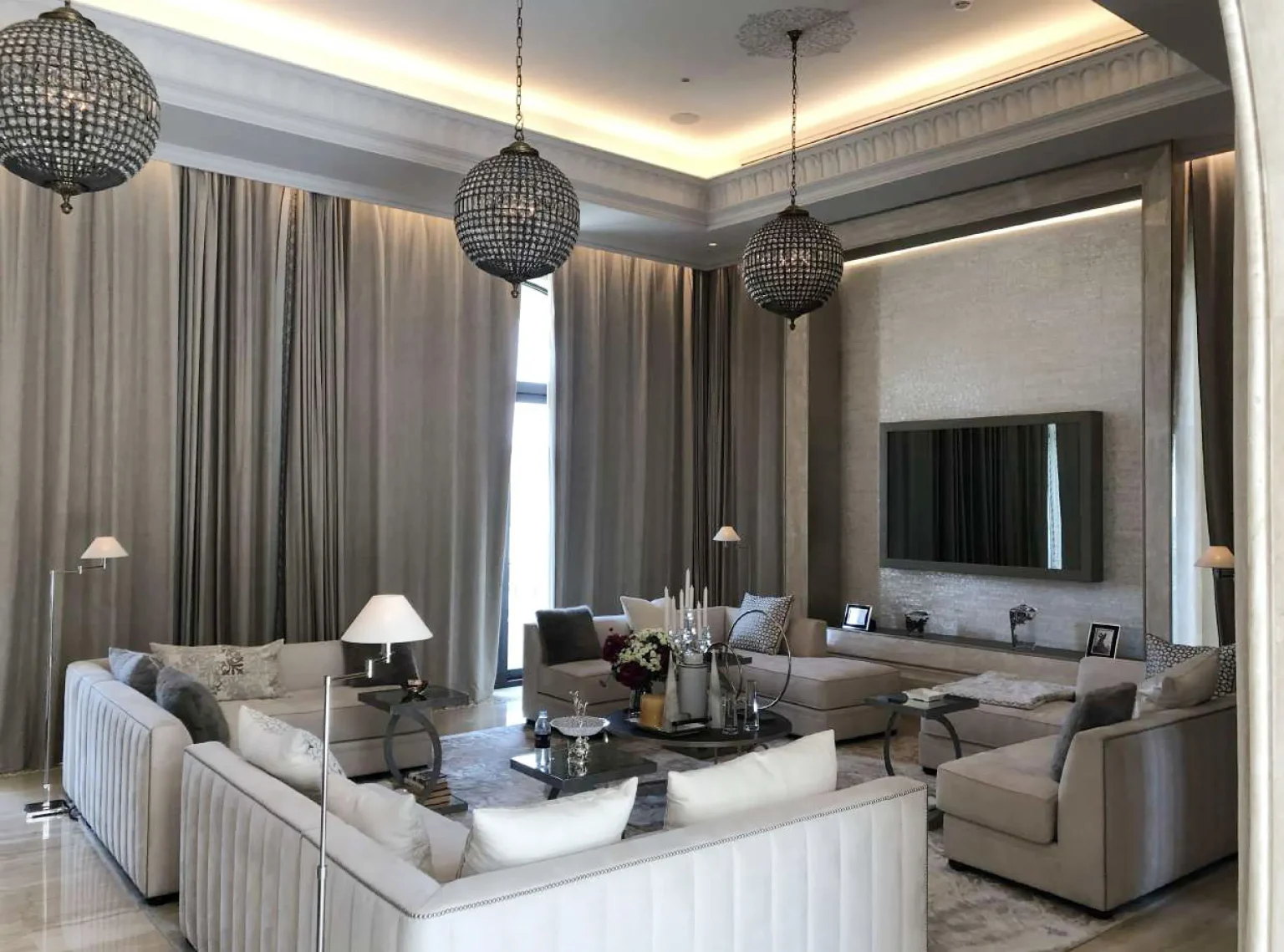
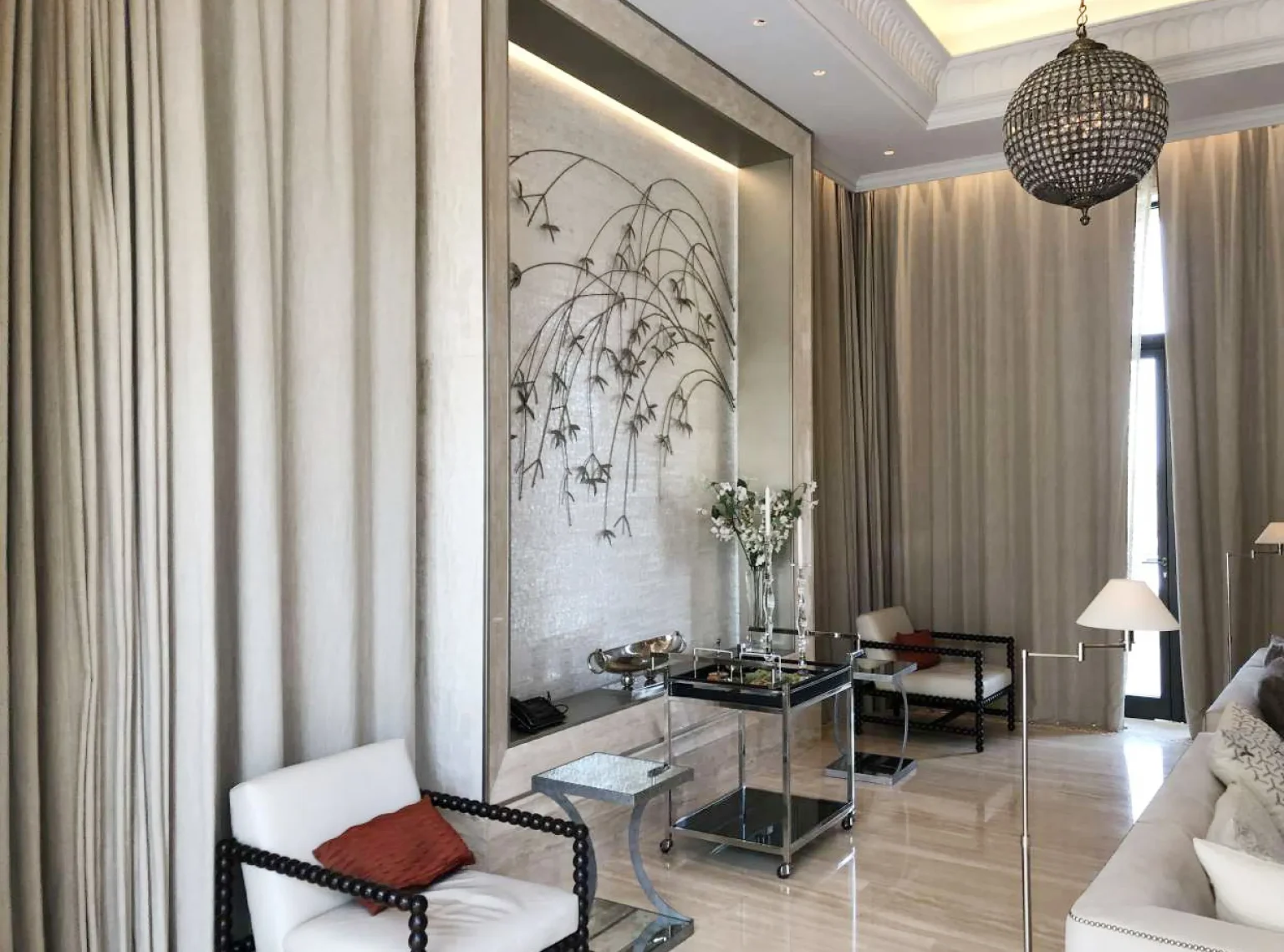
Custom furniture manufacturing overlaps with joinery but is not identical either. Furniture is freestanding (a sofa, a dining table), while joinery is built into the space itself, fitted wardrobes, kitchen runs, and panel systems that become part of the architecture rather than movable pieces. Getting the joinery vs carpentry distinction right before hiring saves a lot of back-and-forth once a project is already underway.
What a Custom Joinery Company in Dubai Actually Does
A genuine custom joinery Dubai company works from precise site measurements and architectural drawings, not a fixed catalogue of cabinet sizes. This matters because Dubai apartments, villas, and commercial units rarely follow standard dimensions, and off-the-shelf units almost always leave gaps or require filler panels that look unfinished.
The Custom Joinery Process, Step by Step
- Site survey and measurement. A technician measures the exact space, checking wall alignment, floor level, and any services (electrical points, AC vents) that the joinery needs to work around.
- Design and shop drawings. CAD drawings define every dimension, hinge position, and internal configuration before fabrication starts.
- Material and finish selection. Client chooses board type, wood species or veneer, hardware brand, and finish against physical samples.
- Offsite fabrication. CNC cutting, edge-banding, and joinery assembly happen in the workshop, away from the live site, which keeps tolerances tighter than on-site construction allows.
- Quality check. Every component is checked for fit, finish, and hardware alignment before it leaves the workshop.
- On-site installation. Pre-fabricated units are delivered and fitted, with final adjustments made for any as-built variance from the original survey.
Types of Custom Joinery Projects
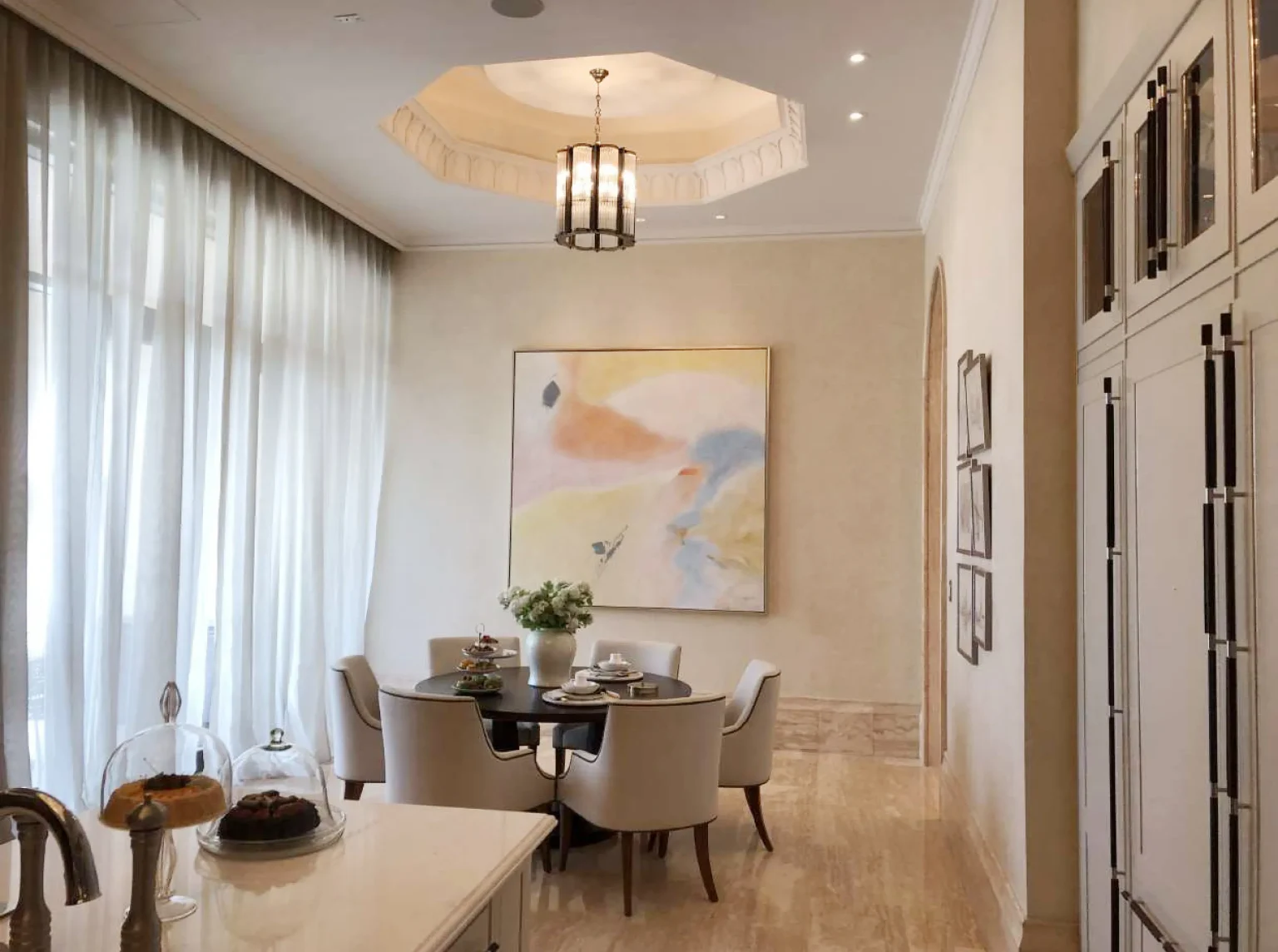
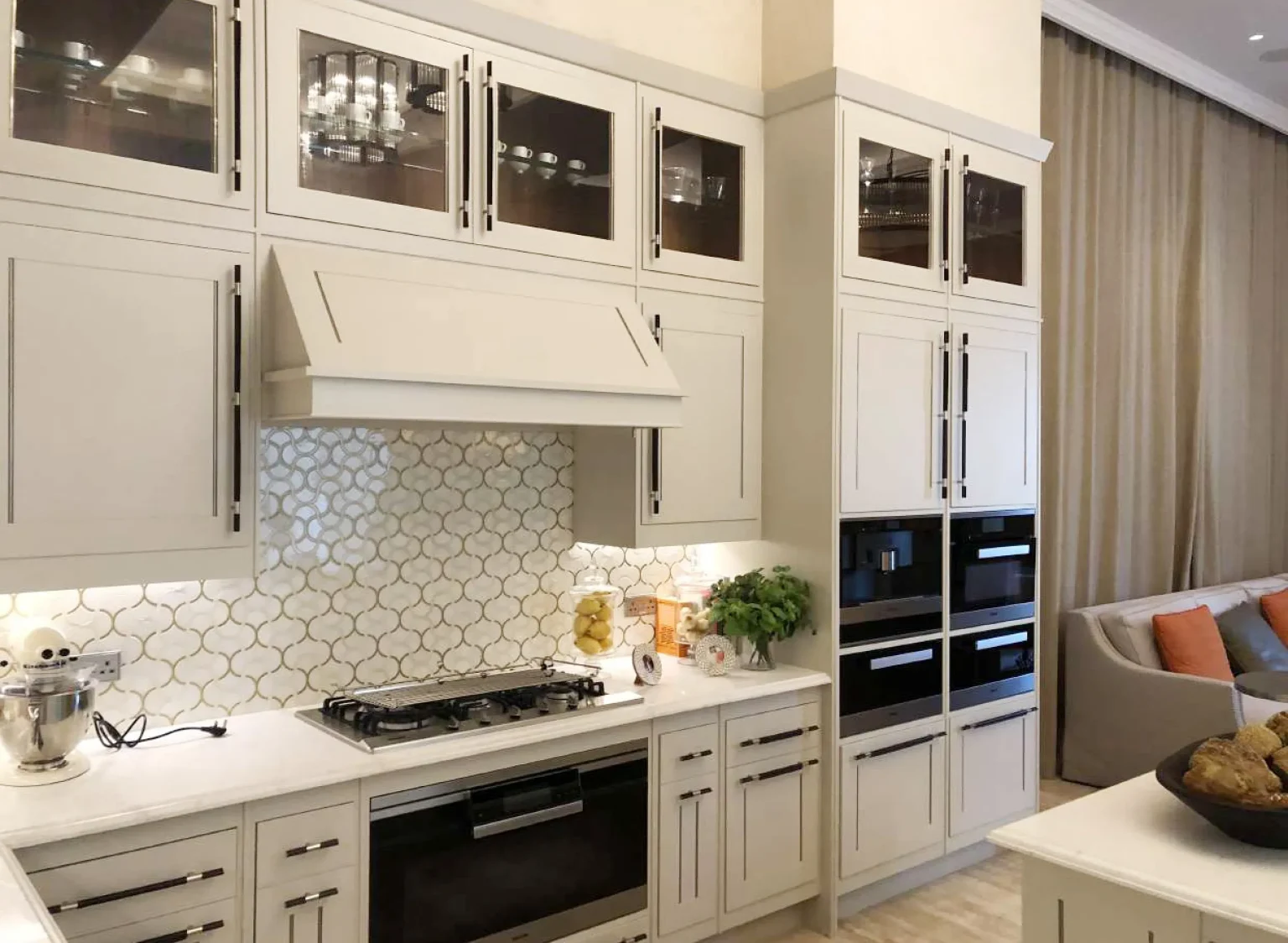
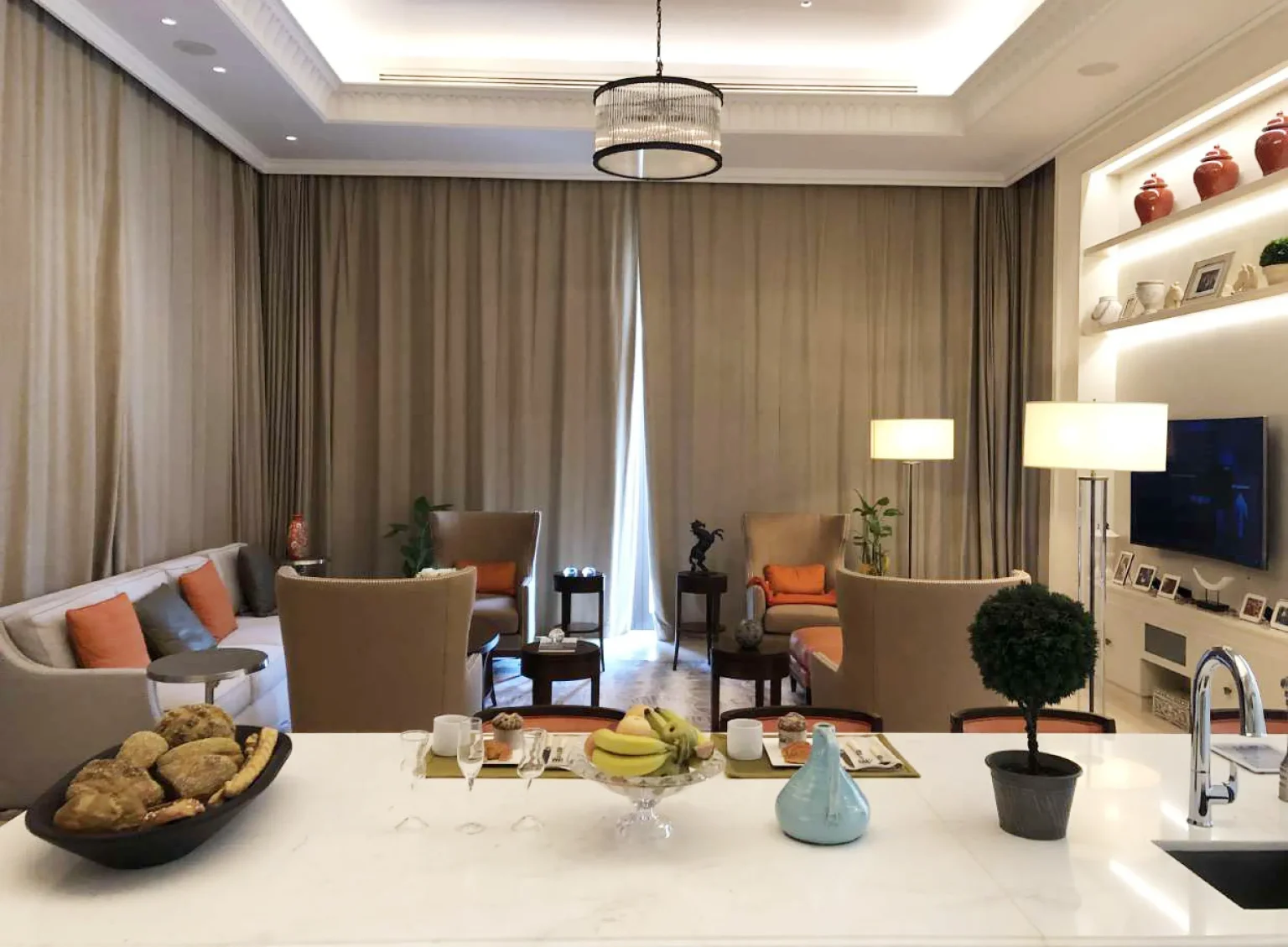
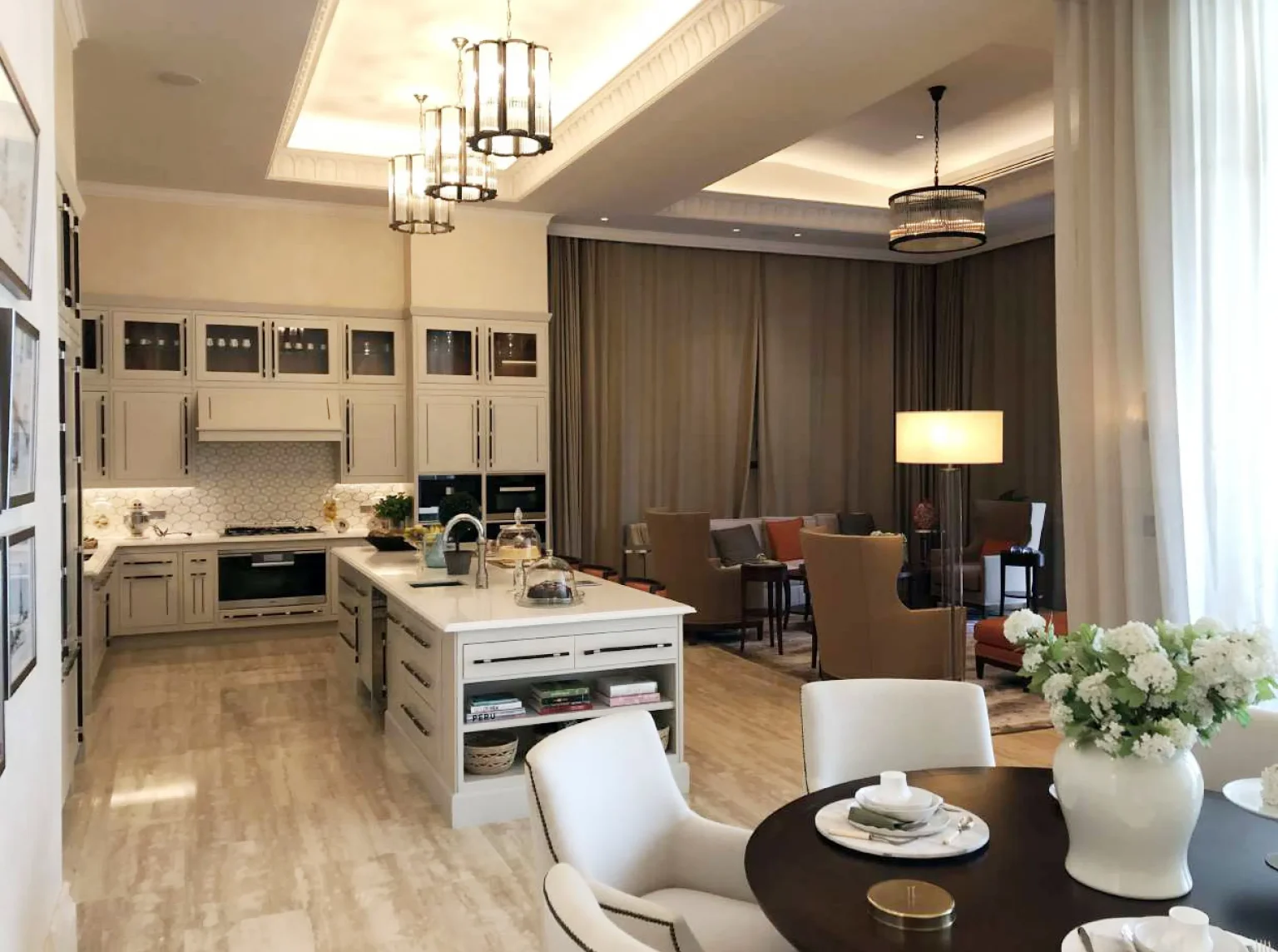
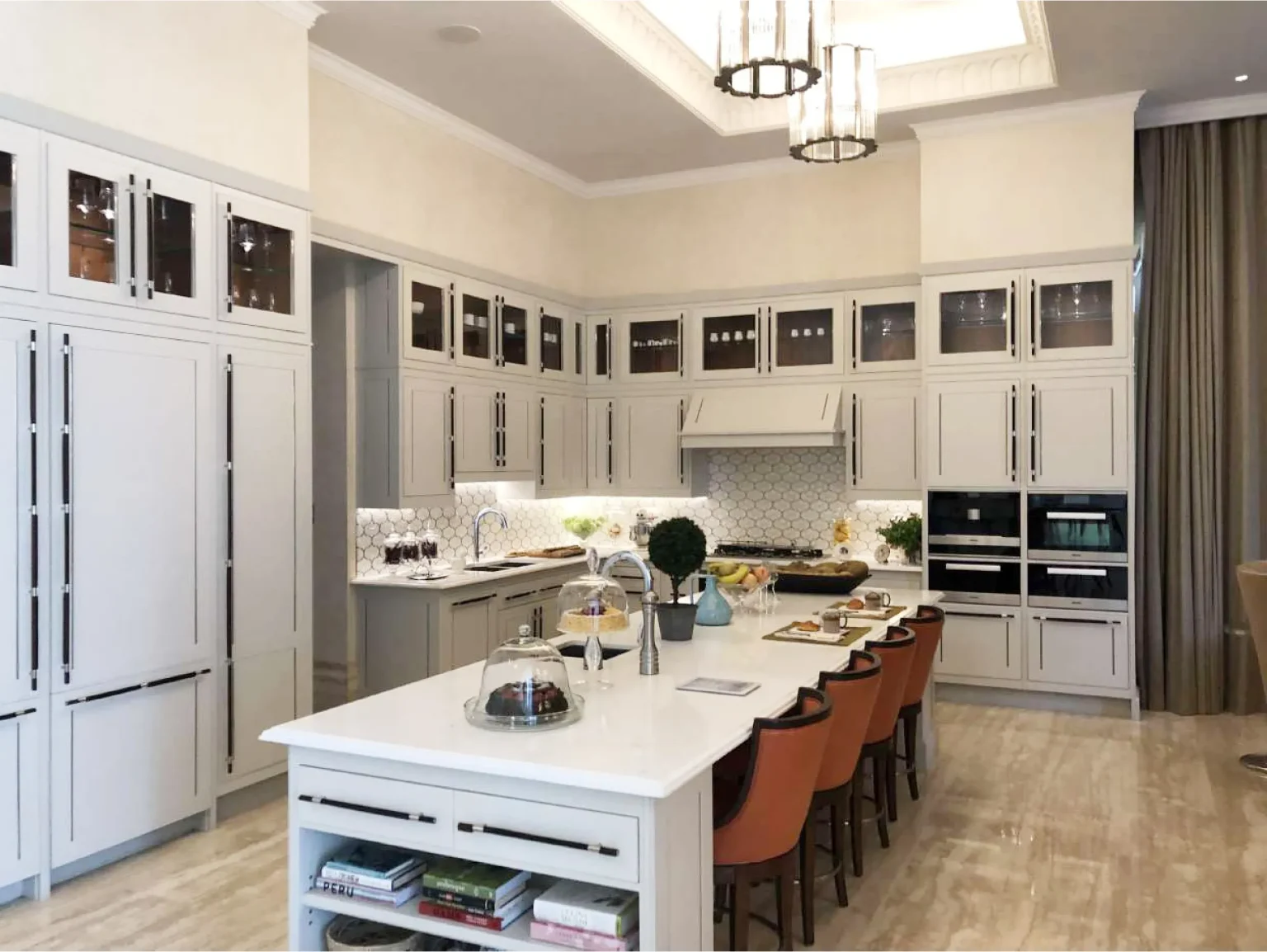
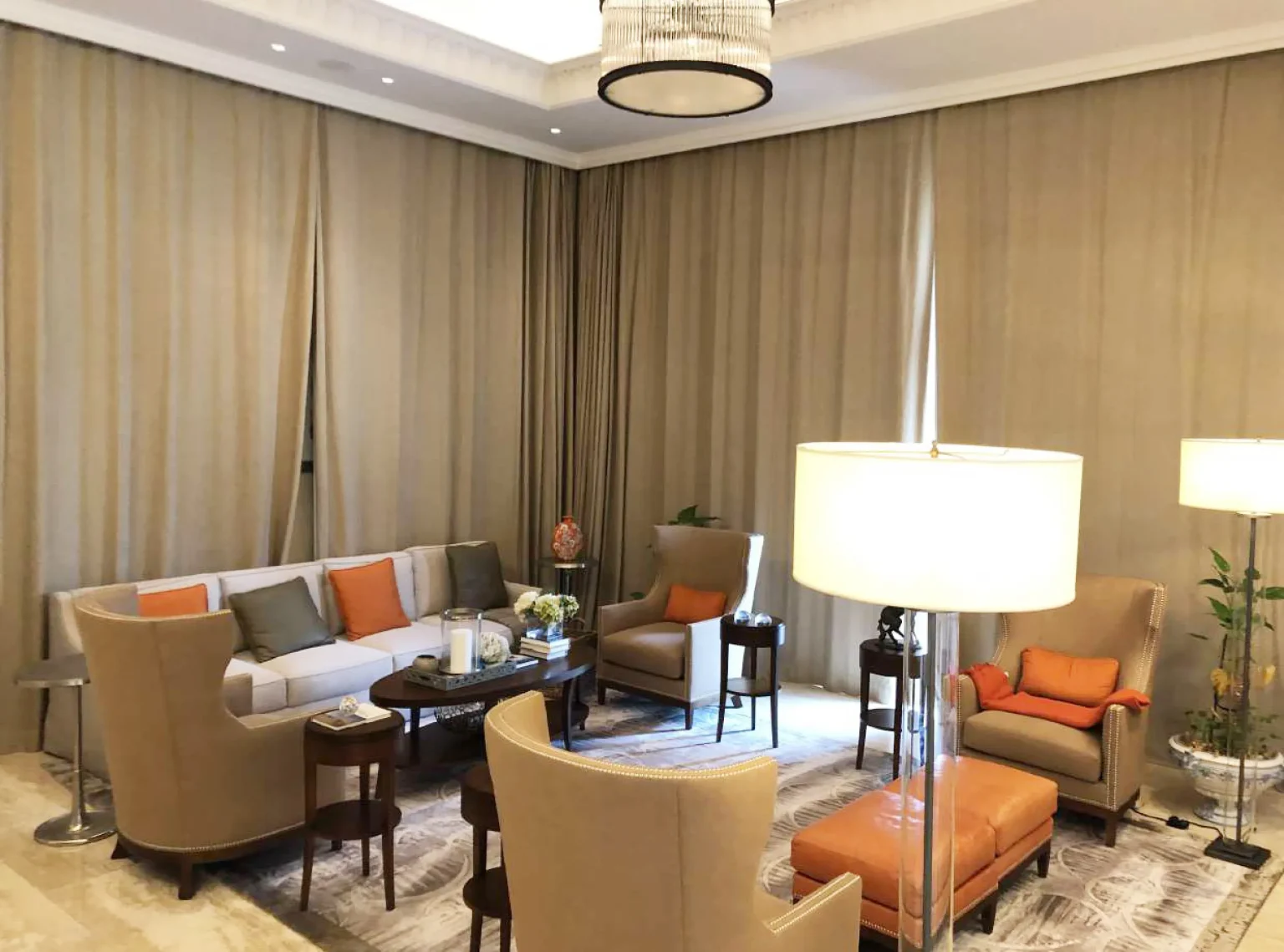
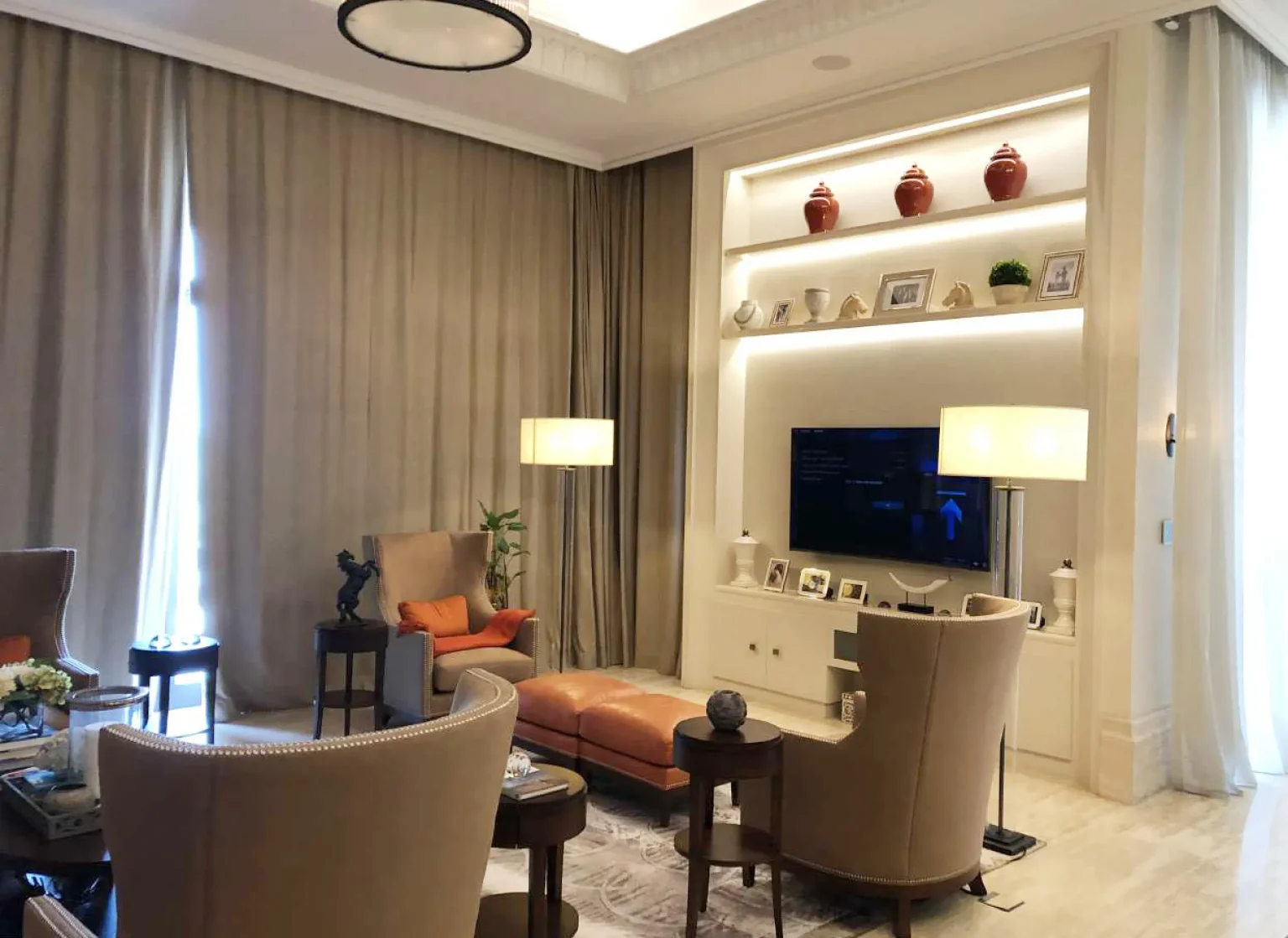
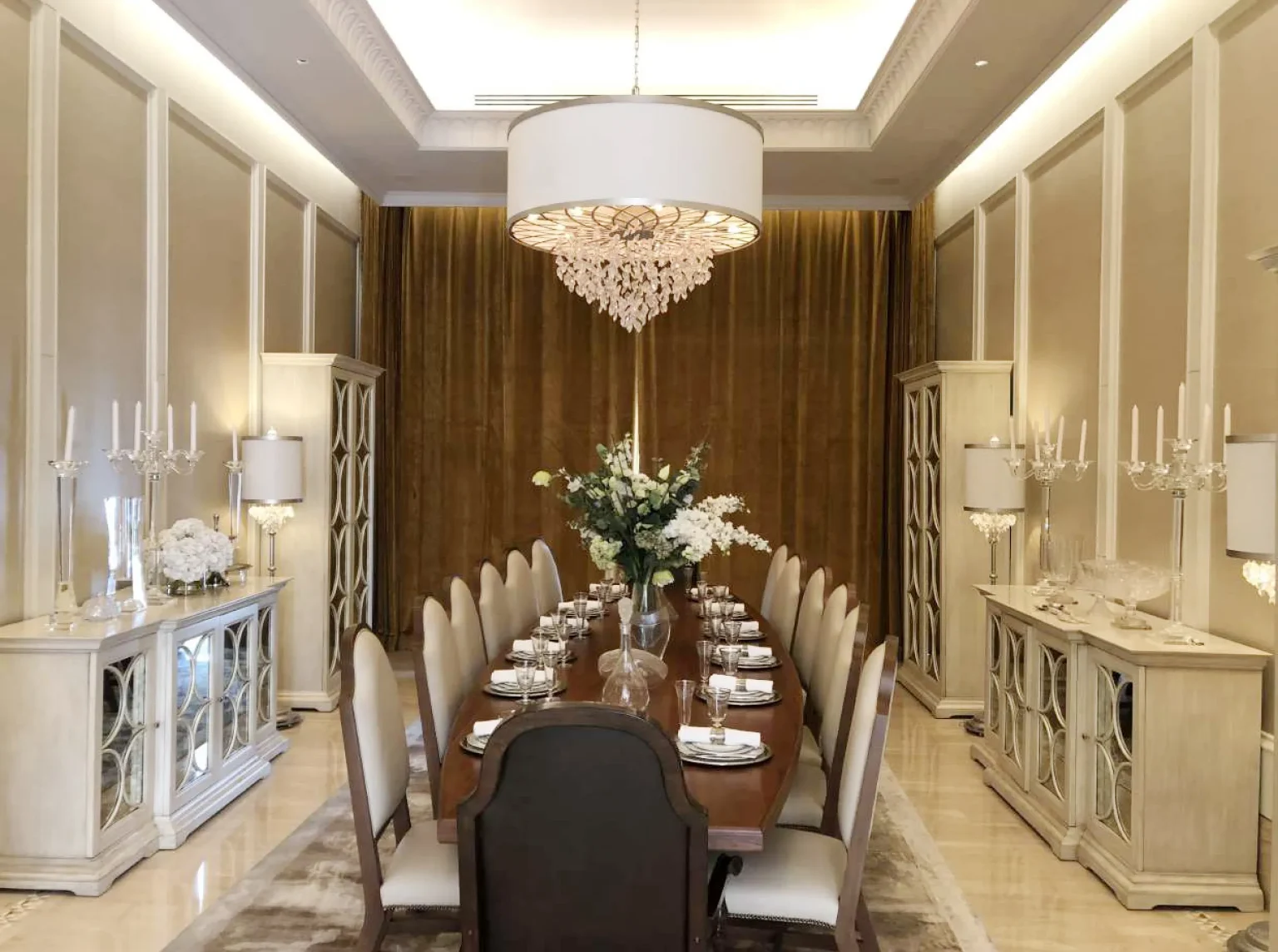
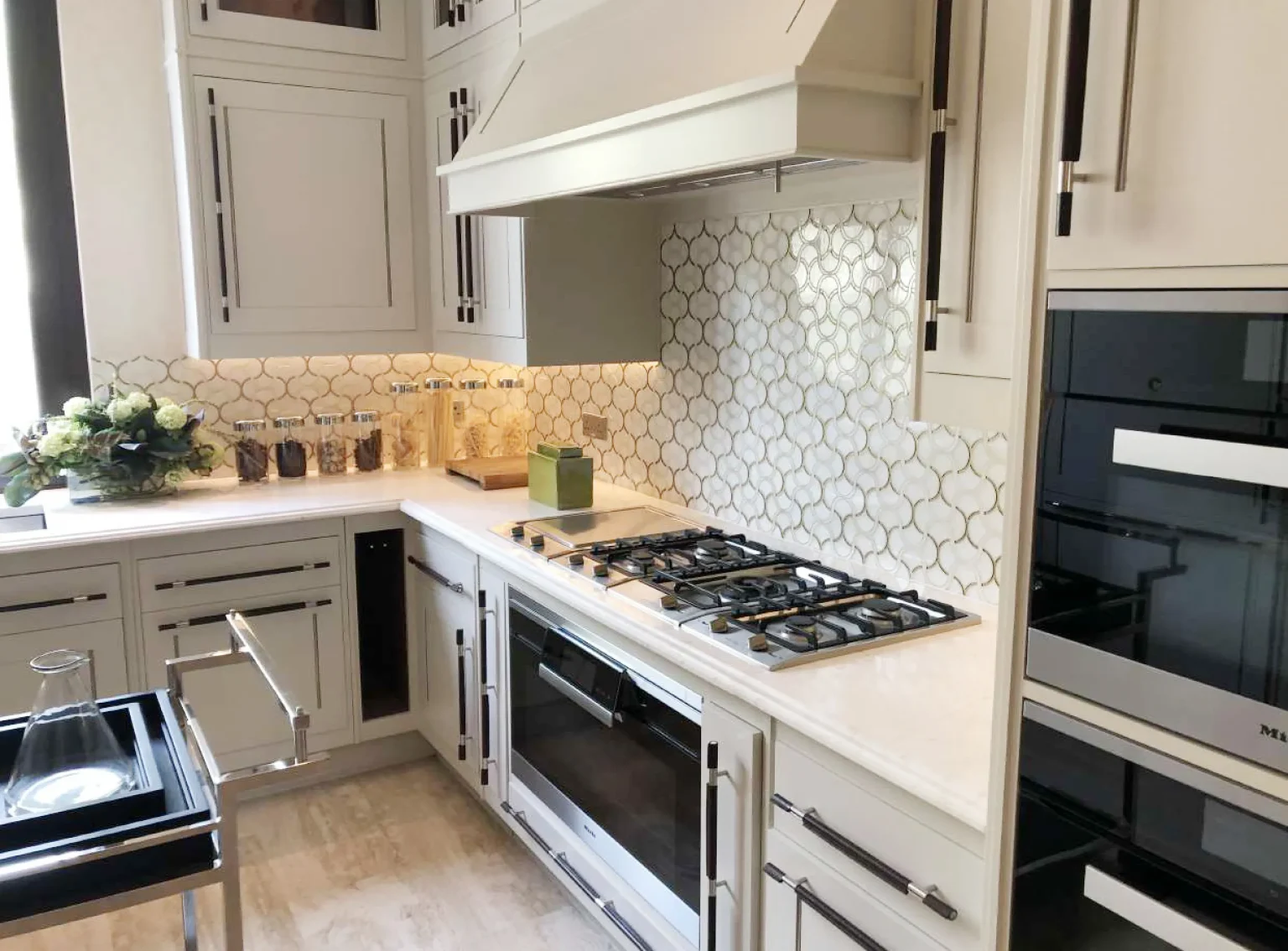
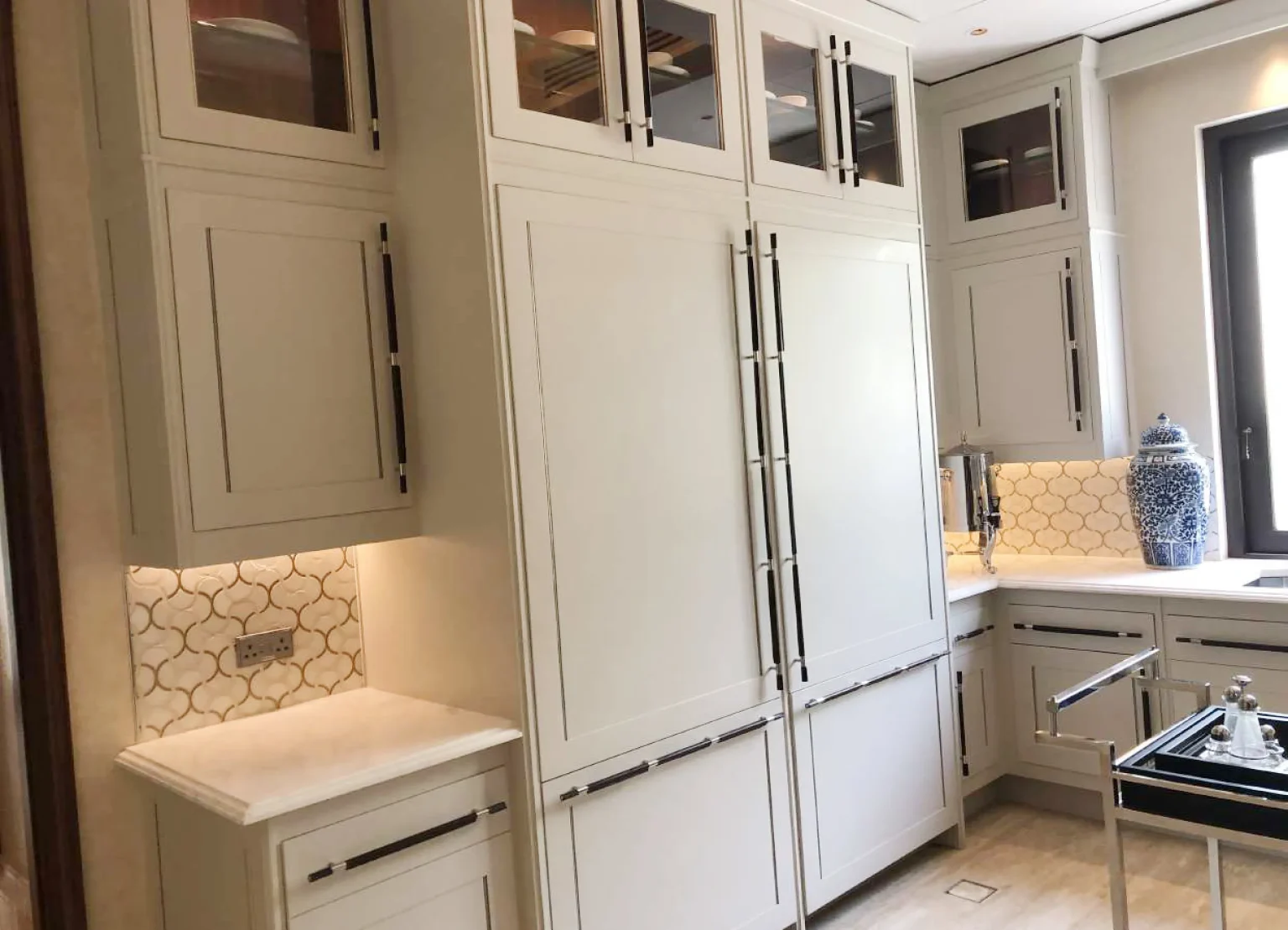
Residential: kitchen joinery Dubai projects, fitted wardrobe joinery, TV and media units, wall paneling, staircase joinery, and walk-in closet systems for villas and apartments across Dubai Marina, Jumeirah, and The Meadows.
Commercial: commercial joinery Dubai work such as office partitions, reception counters, retail display joinery, and false ceiling systems for fit-outs in Business Bay, JLT, and DIFC.
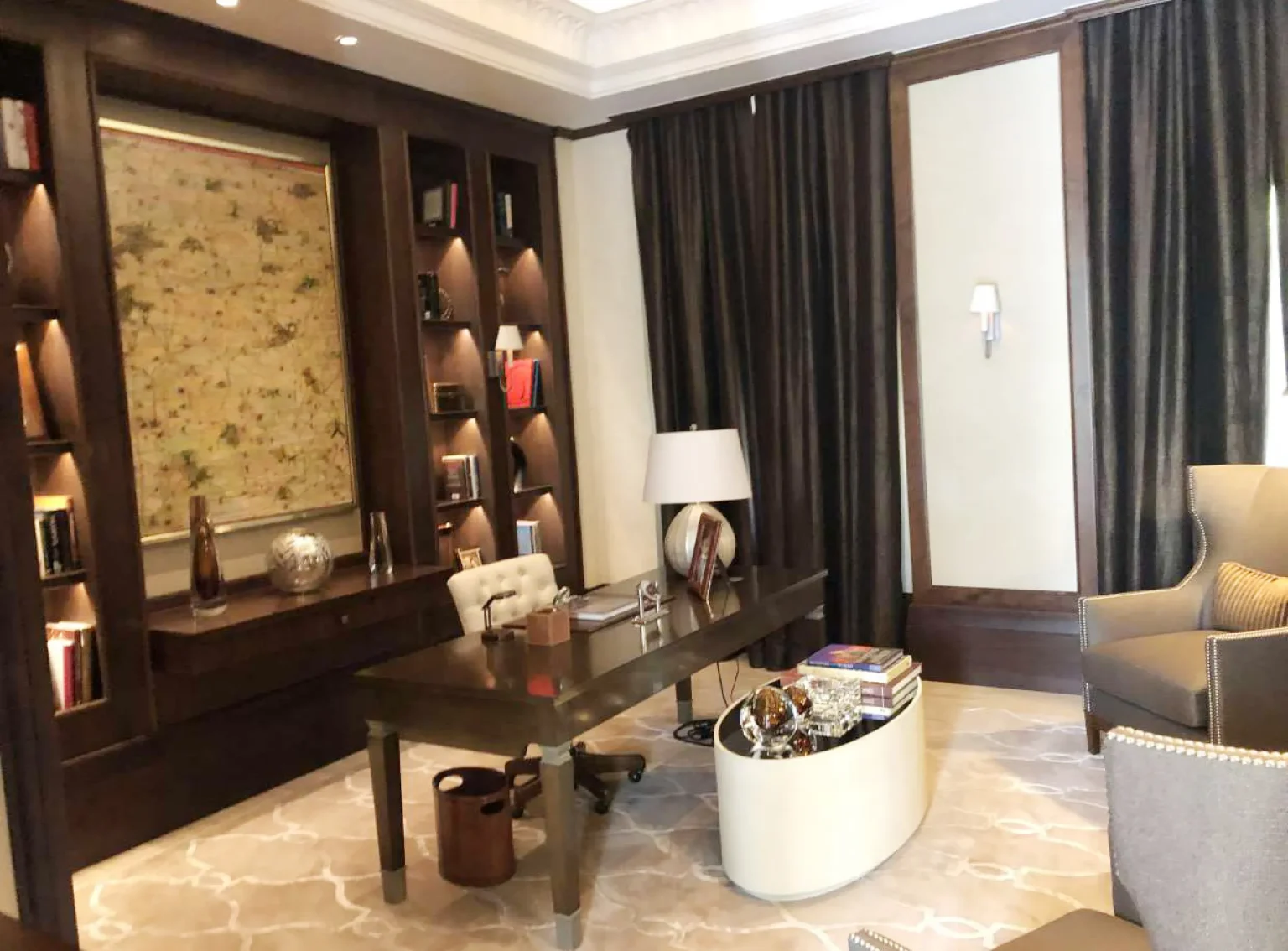
Most custom joinery for offices Dubai projects is planned alongside the broader fit-out, since partition layouts and reception joinery need to align with electrical and ceiling works rather than being installed as an afterthought. The same applies to custom joinery for villas Dubai, where wardrobe and kitchen joinery is usually finalized once the interior design and electrical layout are locked.
Joinery vs Custom Furniture: Which Do You Need
Buyers often bring a furniture brief to a joinery workshop, or a joinery brief to a furniture manufacturer, without realizing the two overlap but are priced and planned differently. If a piece needs to be fitted to a specific wall, ceiling height, or alcove, it is a joinery project and should be measured and quoted against the exact space. If a piece can be moved between homes or rooms without alteration, it is a furniture project and can be selected or customized independently of the surrounding architecture. Getting this distinction right before requesting quotes avoids comparing prices for two different scopes of work.
Materials Used in Custom Joinery in Dubai
Material choice affects how joinery performs under Dubai’s climate as much as how it looks. Solid oak is a common choice for dining tables, heavy-duty doors, and flooring for its grain and long-term durability. High-end veneer gives a uniform, sophisticated finish for large-scale wall paneling and office desks without the cost of solid timber throughout. Moisture-resistant MDF provides a flawless base for high-gloss or matte lacquer finishes on kitchen cabinets and wardrobes, since it resists the swelling that lower-grade board develops under humidity and constant air conditioning. Plywood is preferred for structural cores that need extra load-bearing strength, such as tall wardrobe carcasses. Gypsum work often runs alongside joinery for false ceilings with integrated lighting and office partitions, since both trades are usually coordinated by the same Interior & fit-out team.
Custom Joinery Cost in Dubai: Real Price Ranges
Custom joinery cost Dubai depends on material grade, hardware brand, and finish complexity. As a working guide:
| Item | Typical Range (AED) |
|---|---|
| Fitted wardrobe (per linear metre) | 1,200 – 3,500 |
| Kitchen joinery (full unit) | 15,000 – 55,000+ |
| TV/media unit | 3,000 – 9,000 |
| Wall paneling (per square metre) | 250 – 800 |
| Office partition joinery (per linear metre) | 800 – 2,200 |
| Reception counter (custom) | 6,000 – 25,000 |
A joinery quote should always separate material cost, hardware, and installation labour. Bundled lump-sum quotes make it harder to see where a lower bidder cut corners.
Joinery Lead Time: How Long Projects Take
- Single item (a wardrobe or TV unit): 2 to 4 weeks
- Full kitchen joinery: 4 to 6 weeks
- Villa-wide joinery package: 8 to 14 weeks
- Commercial office or retail joinery rollout: 6 to 12 weeks, depending on site access and approval timelines
Joinery installation Dubai for commercial units is often delayed more by landlord handover schedules and approval timelines than by workshop production capacity itself.
Approvals and Regulations for Commercial Joinery in Dubai
Joinery installed inside a leased commercial unit typically needs a Dubai Municipality or relevant free zone authority NOC before work begins. Projects inside JAFZA or similar zones go through Trakhees instead. Joinery involving fire-rated partitions or materials in hospitality and retail spaces often needs to meet Dubai Civil Defence requirements. Developer communities such as Emaar, Nakheel, and Tecom also enforce their own fit-out manuals that can restrict finishes, colors, or fixing methods for built-in joinery. A joinery contractor Dubai with planning and engineering capability in-house can flag these requirements at design stage rather than after fabrication.
Warranty and Maintenance for Joinery in Dubai
A reliable joinery manufacturer Dubai should separate structural warranty from finish warranty in writing. Carcass and joinery structure typically carry a 2 to 5 year warranty, while lacquer, veneer, and hardware finishes are usually covered for 1 to 2 years, since daily use and sun exposure affect finishes faster than structural components. For bespoke joinery Dubai pieces near south-facing windows, requesting UV-stable lacquer upfront reduces the chance of visible fading within the first couple of years. Keeping the original material and hardware specification on file with the manufacturer also makes future repairs or matching extensions far simpler than starting from scratch with a different contractor.
How to Choose a Joinery Contractor in Dubai
Before you hire a joinery contractor Dubai for a villa or commercial project, run through a short checklist:
- Confirm whether fabrication happens in an owned workshop or is outsourced.
- Request a shop drawing before production, not just a concept sketch.
- Ask for physical material and hardware samples.
- Check who is responsible for municipality or Civil Defence approvals if the project needs them.
- Compare quotes on a like-for-like material and hardware specification, not just the bottom-line number.
- Get a single point of contact covering design, fabrication, and installation.
When comparing options for the best joinery company Dubai for a specific project, a workshop visit tells you more than a showroom tour, since it shows the actual production quality behind the finished samples on display.
Ready to Start Your Joinery Project?
Whether it is a single fitted wardrobe or a full office fit-out, CHIHU Group designs, fabricates, and installs custom joinery Dubai projects in-house from our own workshop. Book a free consultation and get a real quote, with real shop drawings, within 24 hours.
Frequently Asked Questions
What is the difference between joinery and carpentry in Dubai?
Joinery is precision woodwork such as wardrobes and cabinetry, fabricated offsite in a workshop and installed on-site. Carpentry typically covers larger-scale, on-site construction and repair work rather than pre-fabricated fitted units.
How much does custom joinery cost in Dubai?
Costs range from around AED 1,200 per linear metre for a fitted wardrobe to AED 55,000 or more for a full kitchen joinery package, depending on material grade and hardware.
How long does custom joinery take to complete in Dubai?
A single item takes 2 to 4 weeks, a full kitchen takes 4 to 6 weeks, and a villa-wide or commercial joinery package takes 8 to 14 weeks depending on scope and site access.
Do I need approval for joinery work in a commercial unit?
Yes, in most cases. Leased commercial units typically require a municipality or free zone NOC, and joinery involving fire-rated materials in hospitality or retail spaces may also need Dubai Civil Defence approval.
Should joinery be planned separately from the rest of an interior fit-out?
No. Joinery layouts depend on electrical points, ceiling work, and partition positions, so planning it alongside the broader fit-out avoids rework and coordination delays.
What materials hold up best for joinery in the UAE climate?
Moisture-resistant MDF, solid oak, and quality veneer perform best against Dubai’s humidity and constant air conditioning, while plywood is preferred for structural cores that need extra strength.
Does custom joinery come with a warranty in Dubai?
Yes, though structural and finish warranties are usually separate. Carcass and joinery structure typically carry 2 to 5 years of coverage, while lacquer and veneer finishes are usually covered for 1 to 2 years due to normal wear from daily use and sun exposure.