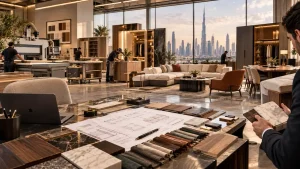
Dubai has no shortage of furniture shops. What it has far fewer of is manufacturers who actually cut, join, and finish furniture on their own factory floor. If you are comparing quotes for a villa, an office, or a hospitality project, the difference between the two changes your price, your lead time, and how much control you have over the final product. This guide walks through what a genuine custom furniture manufacturer Dubai does, what it costs, how long it takes, and which UAE-specific factors most buyers only find out about after signing a contract.
What a Custom Furniture Manufacturer in Dubai Actually Does
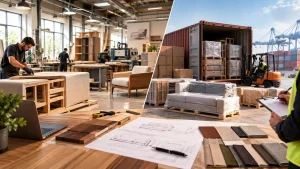
A custom furniture designs dubai, cuts, joins, finishes, and assembles pieces to a client’s exact dimensions, materials, and use case, inside its own workshop. This is different from a furniture trading company that resells factory-made stock from China, Malaysia, or Italy and calls it “custom” because the fabric or color was chosen from a catalogue. It is also different from an interior design studio that draws the concept, then outsources fabrication to a third-party joinery workshop it does not control.
The distinction matters because it determines who is accountable when a wardrobe door does not close flush, a veneer batch does not match, or a delivery date slips. When design, manufacturing, and installation sit under one roof, there is one team to hold responsible. Our in-house furniture manufacturing breakdown covers exactly how to tell the two apart before you sign anything.
The Manufacturing Process, Step by Step
A properly run custom furniture manufacturer Dubai project follows a fixed sequence, not an improvised one.
- Consultation and site survey. A technician takes on-site measurements, checks door swings, ceiling heights, AC vent locations, and existing electrical points before any drawing starts.
- Design and shop drawings. Concepts are developed into CAD shop drawings and 3D renders showing exact dimensions, hardware, and finishes, so nothing is left to interpretation on the workshop floor.
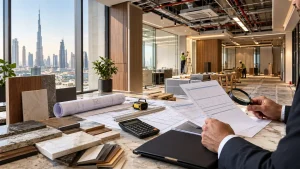
- Material and finish selection. Client chooses wood species, board type, laminate or veneer finish, hardware brand, and upholstery fabric, usually against physical samples rather than screen colors.
- Workshop fabrication. CNC cutting, edge-banding, joinery, spraying or lacquering, and upholstery happen in sequence, with each stage checked before the next begins.
- Quality control. Pieces are inspected for finish consistency, hardware alignment, and dimensional accuracy against the approved shop drawing before they leave the factory.
- Delivery and installation. Site teams install, adjust for any as-built discrepancies, and complete a snagging walkthrough with the client before handover.
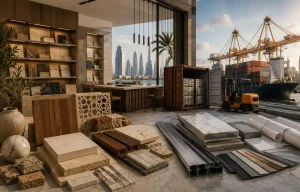
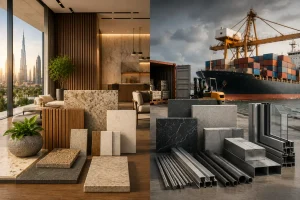
Materials That Hold Up in the UAE Climate
Dubai’s combination of high humidity, intense UV exposure, and near-constant air conditioning is harder on furniture than most buyers expect, and it is where generic advice falls apart.
- Moisture-resistant MDF and marine-grade plywood resist swelling in kitchens, bathrooms, and villas near the coast, where standard MDF can delaminate within a couple of humid seasons.
- Solid wood species like oak, walnut, and teak need to be kiln-dried and acclimatised before fabrication, since constant AC cycling causes untreated timber to crack or warp.
- Powder-coated and stainless steel frames resist corrosion in outdoor majlis furniture and poolside pieces far better than untreated mild steel.
- UV-stable outdoor fabrics and finishes prevent fading on sun-facing furniture, a common complaint with imported pieces specified for temperate climates.
- Laminate, HPL, and veneer finishes each behave differently under sustained AC dryness, which is why finish choice should follow the room’s actual conditions, not just the mood board.
Our building materials team can confirm which board and finish combination suits a specific room before manufacturing starts, and our comparison of locally sourced vs imported materials breaks down the true cost and lead-time trade-off in more depth.
Types of Custom Furniture Projects in Dubai
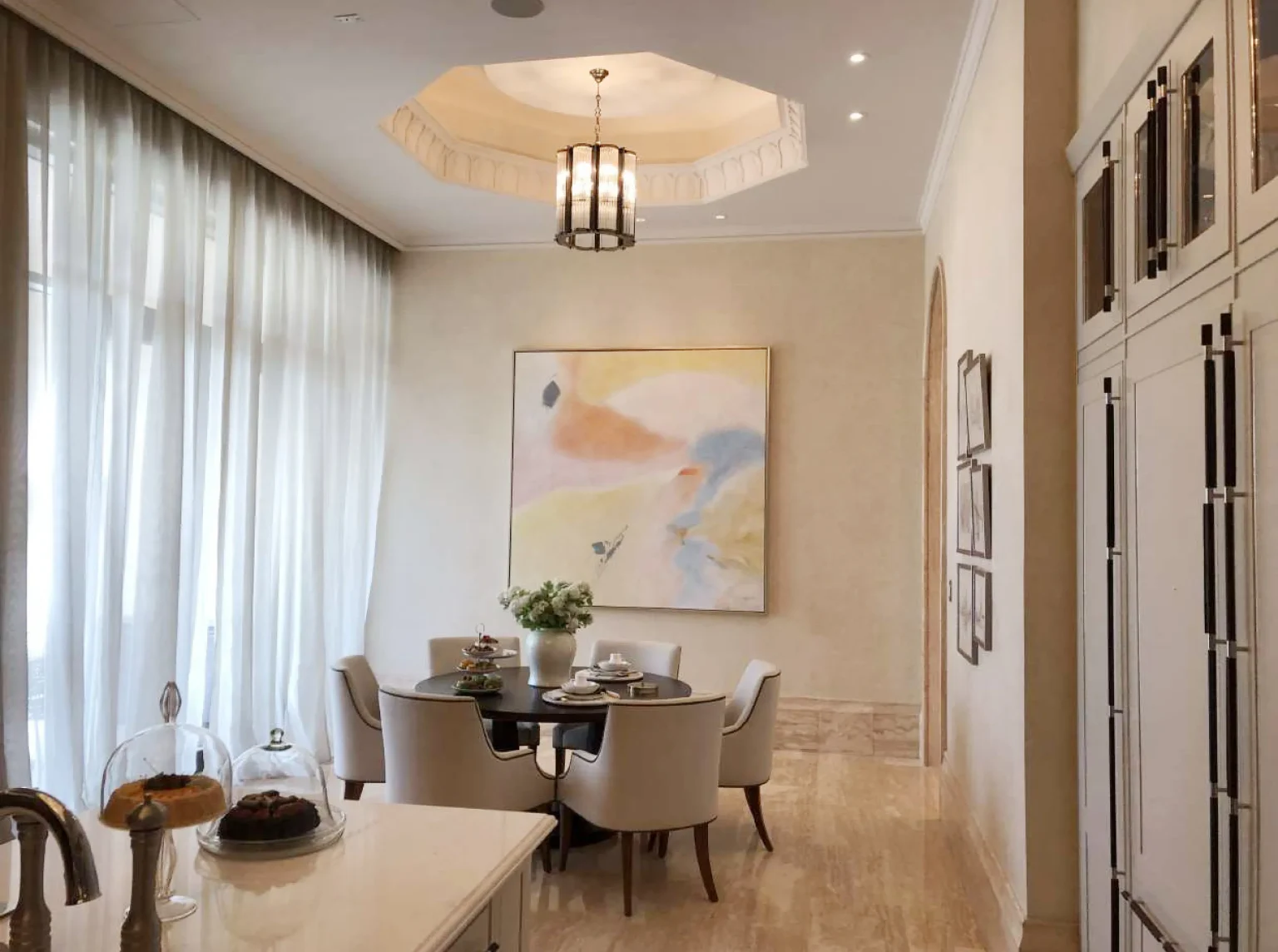
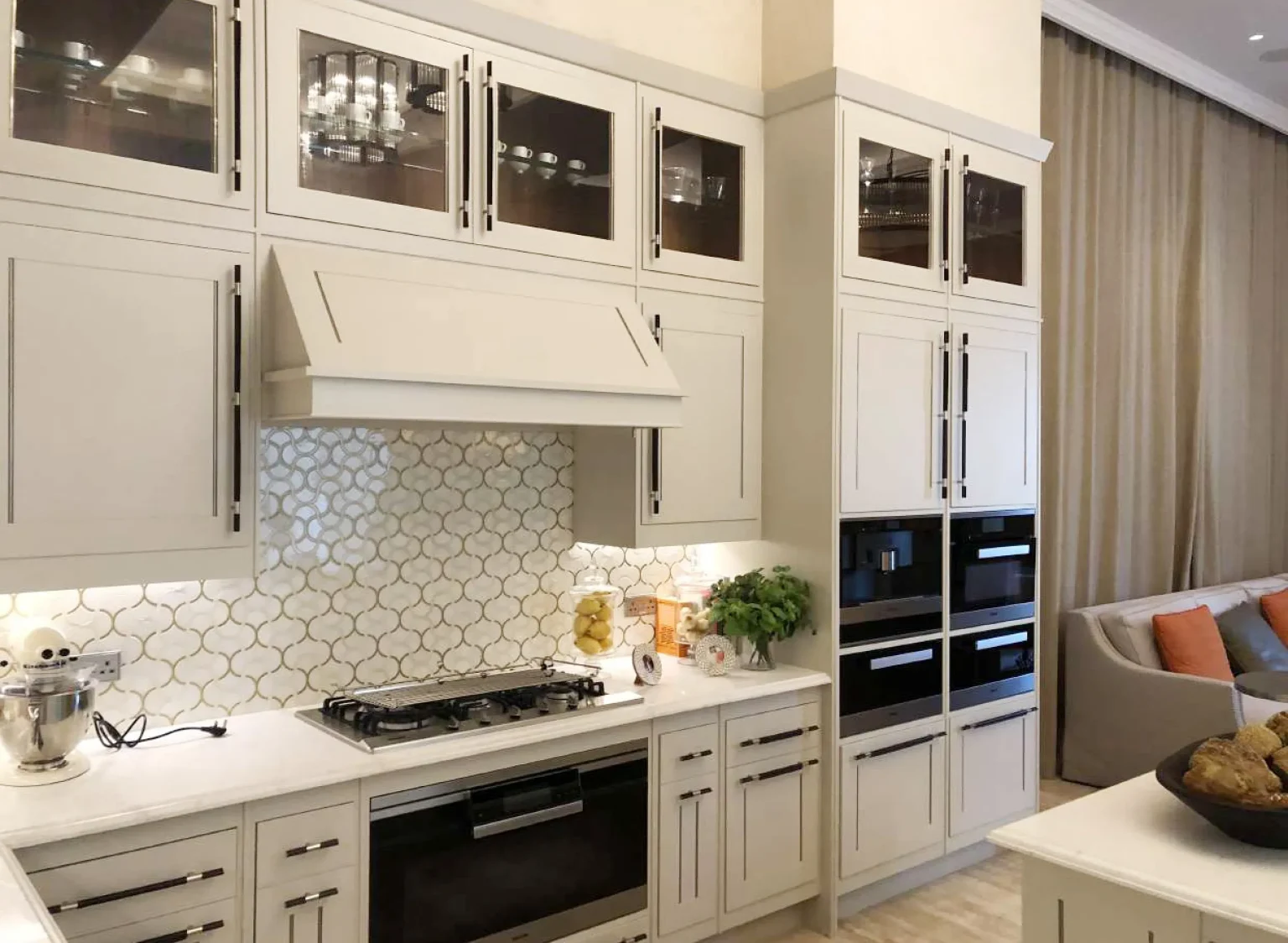
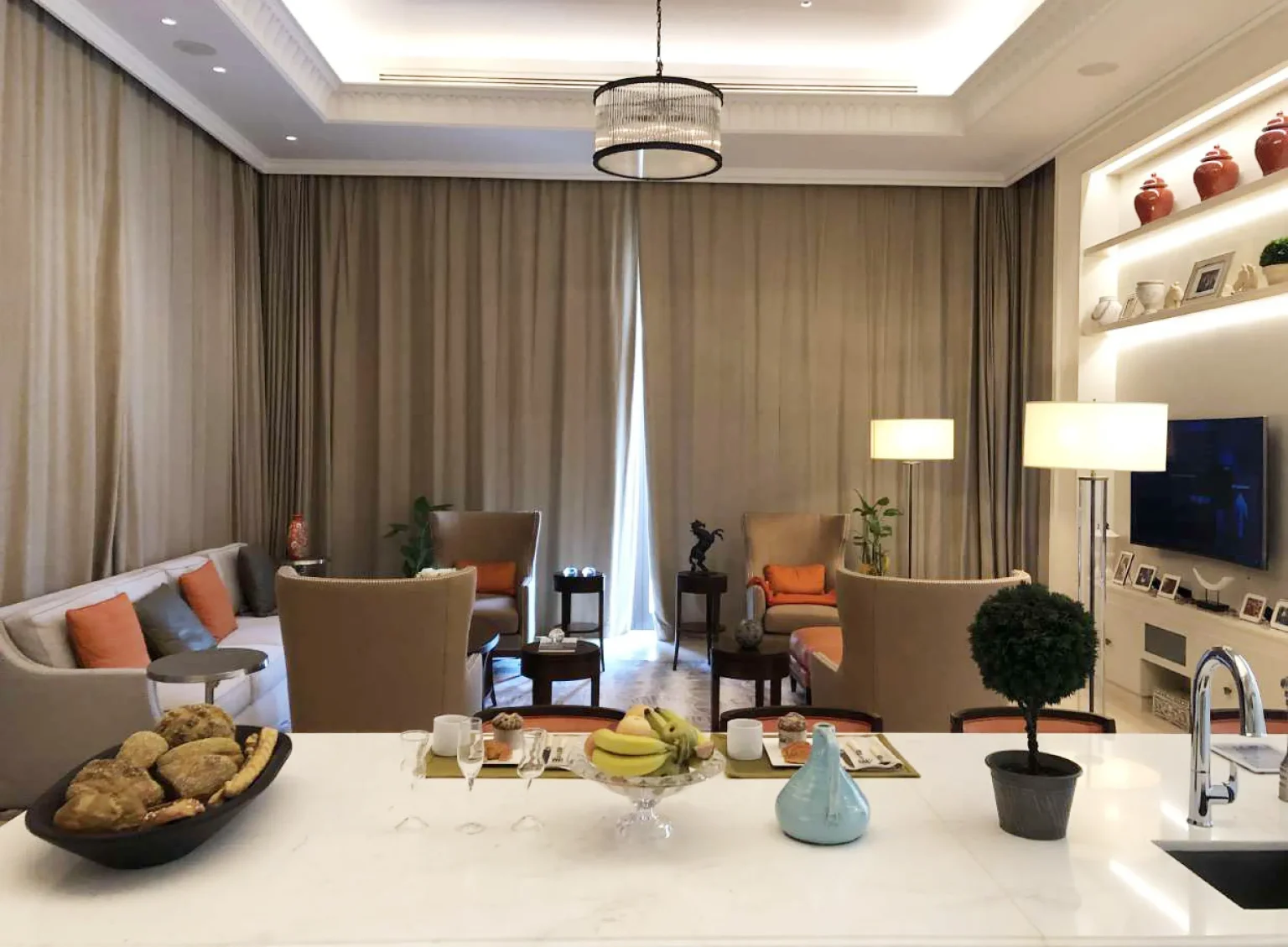
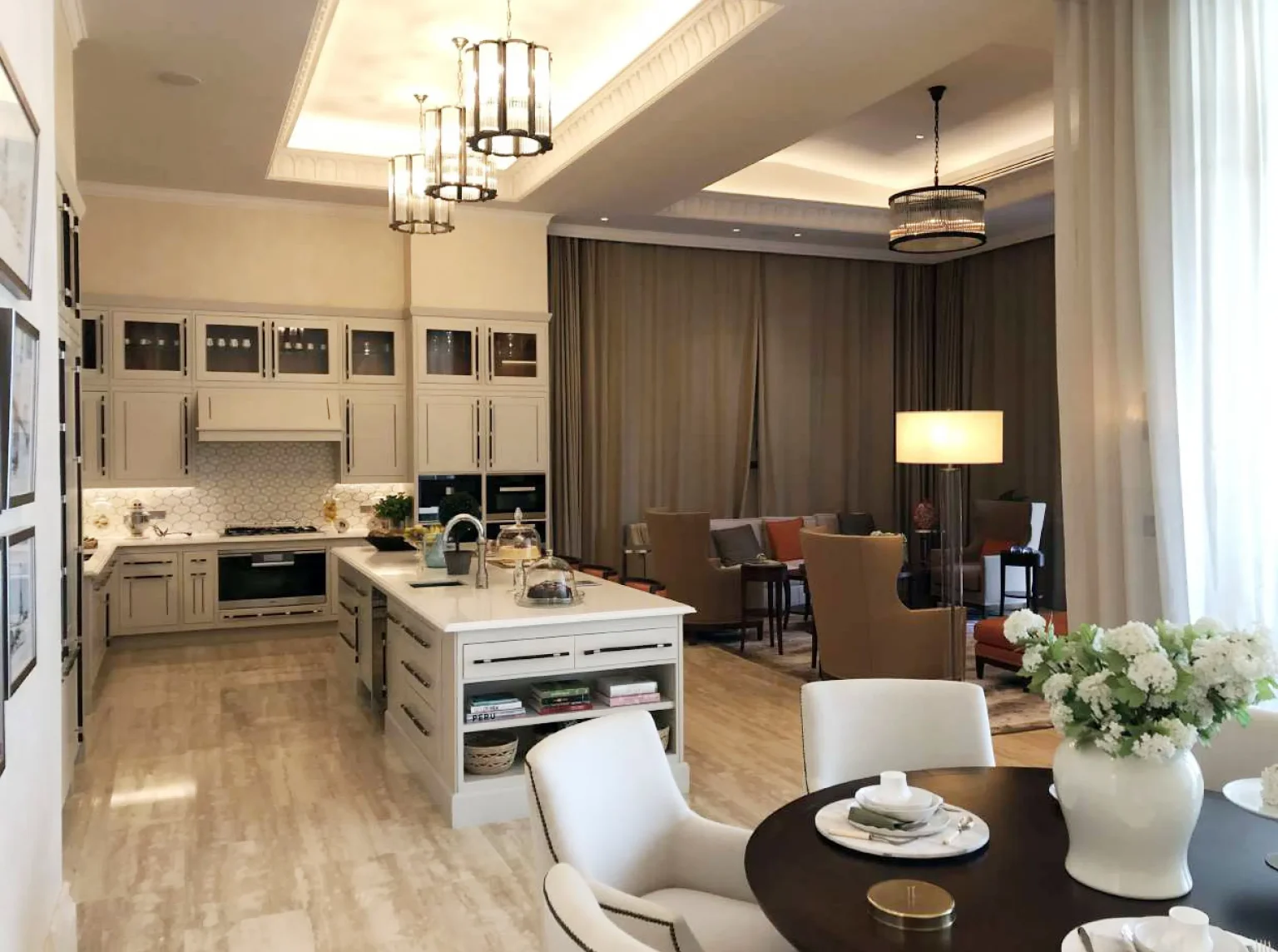
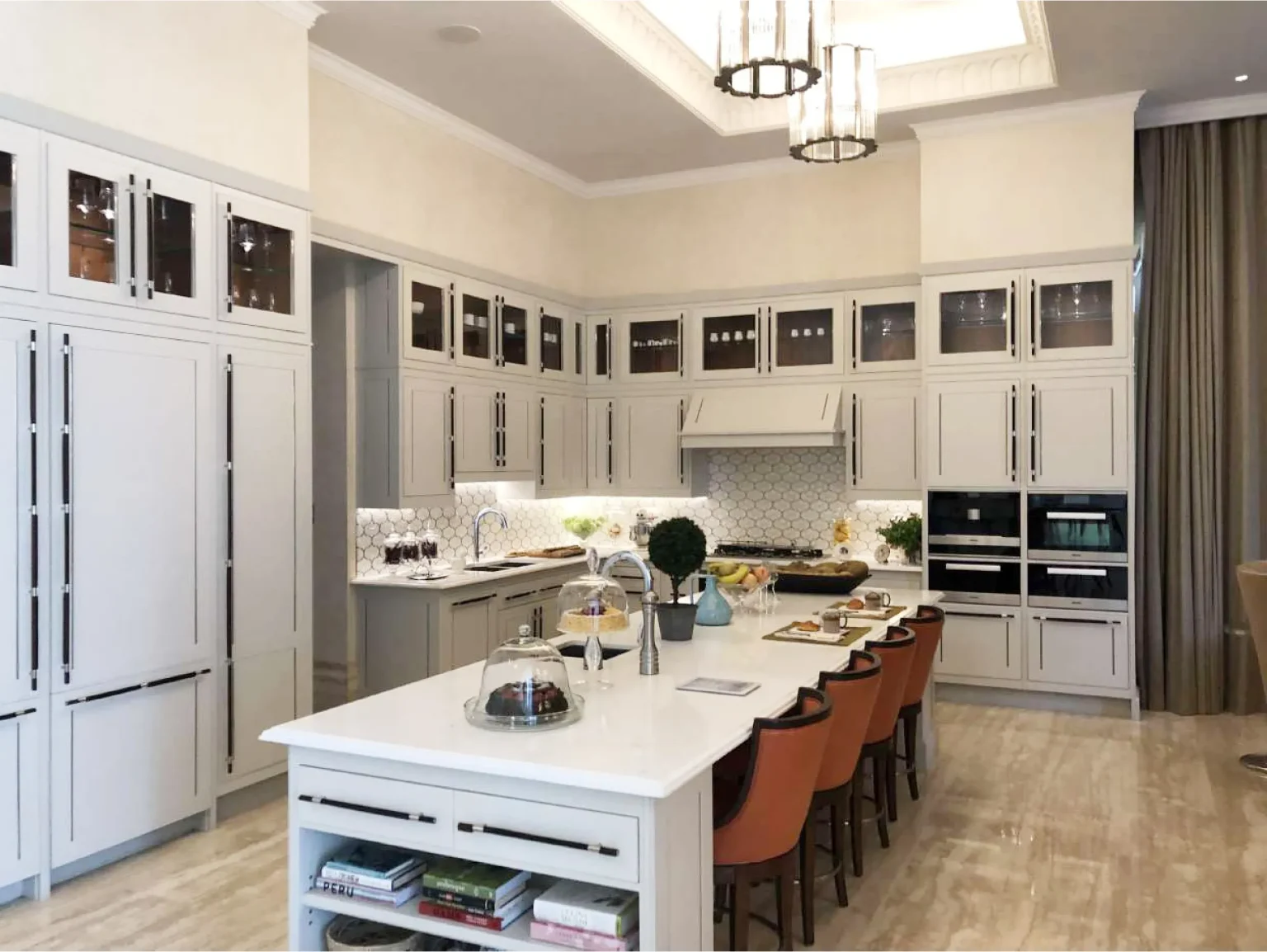
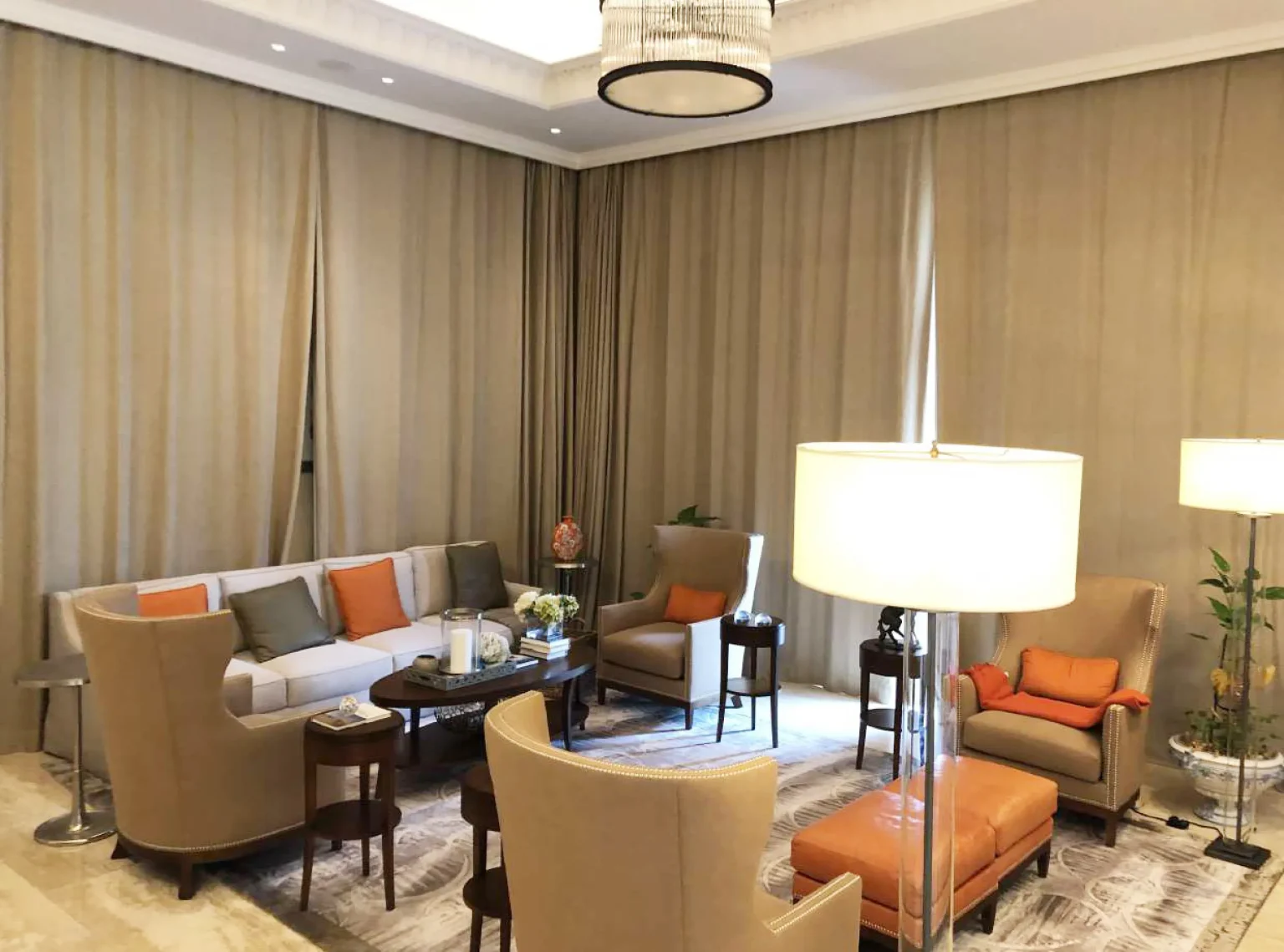
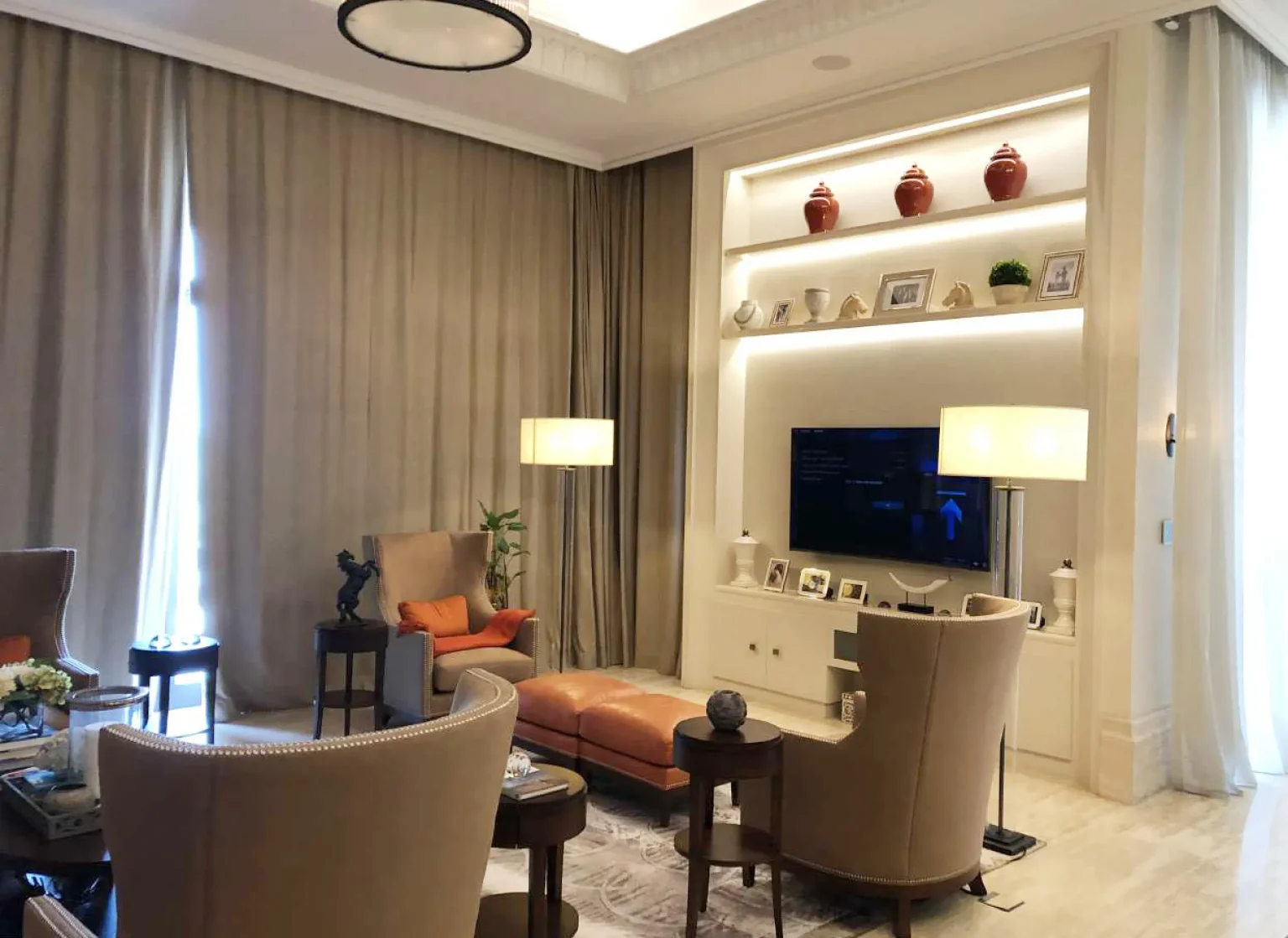
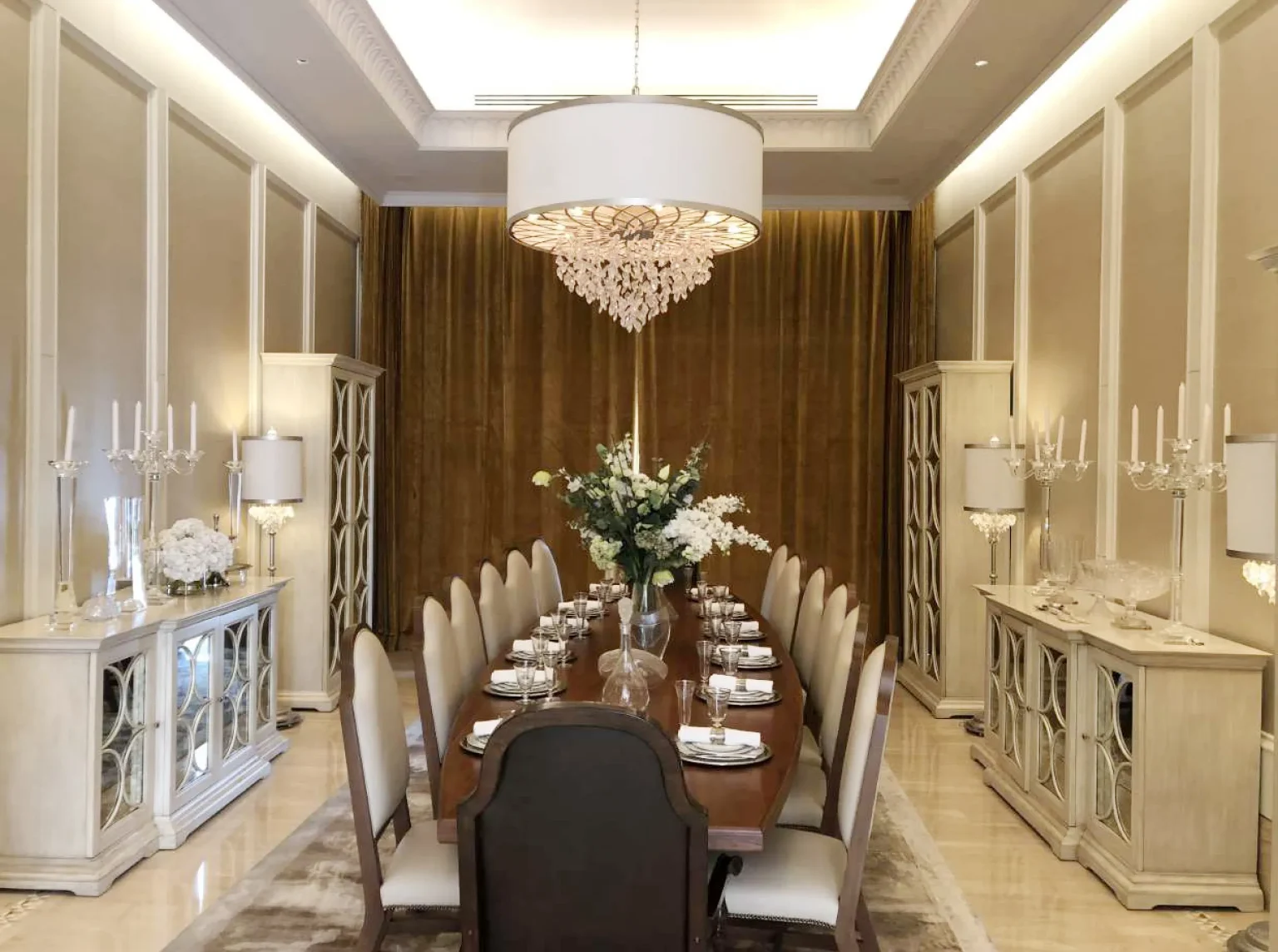
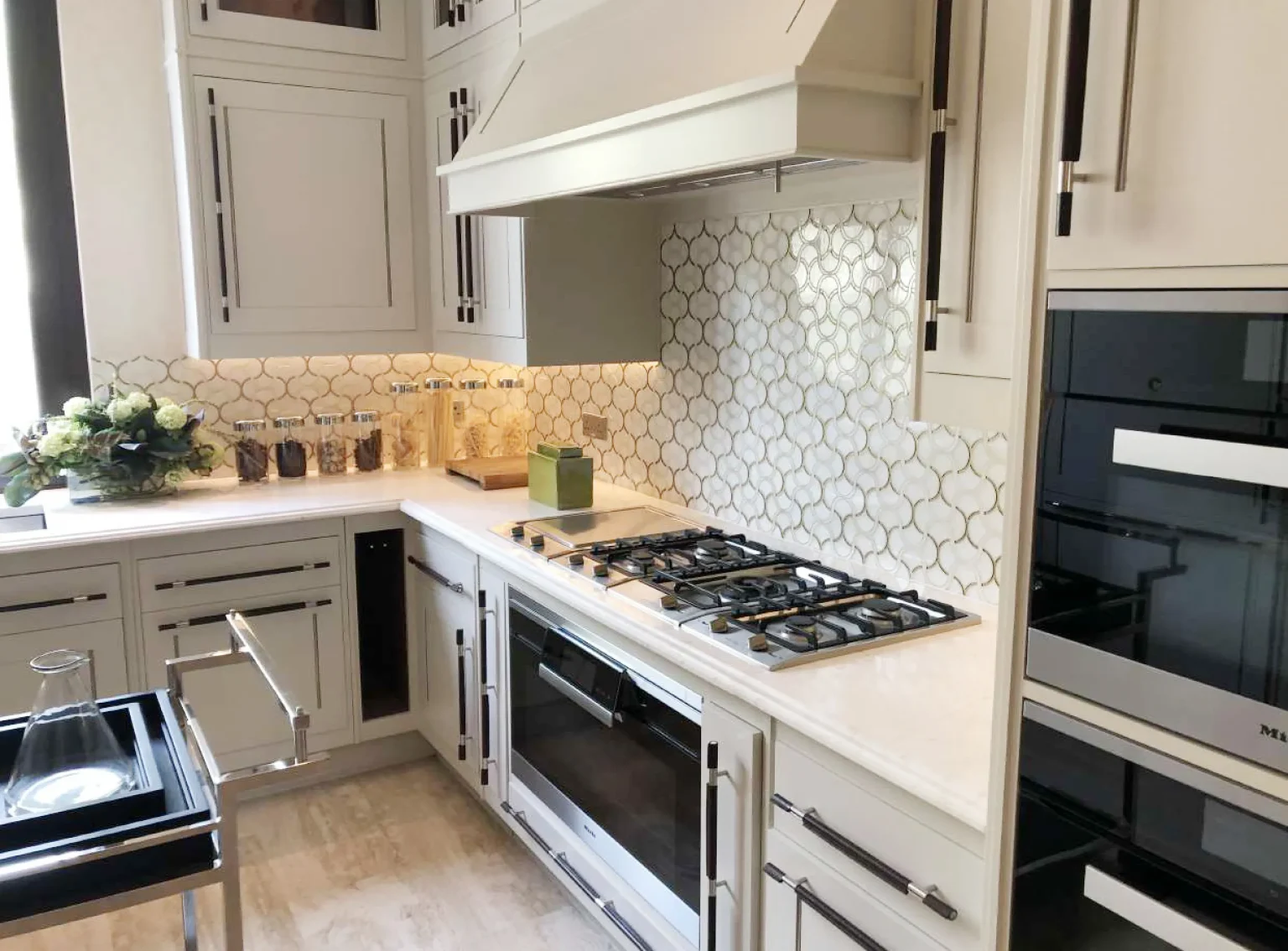
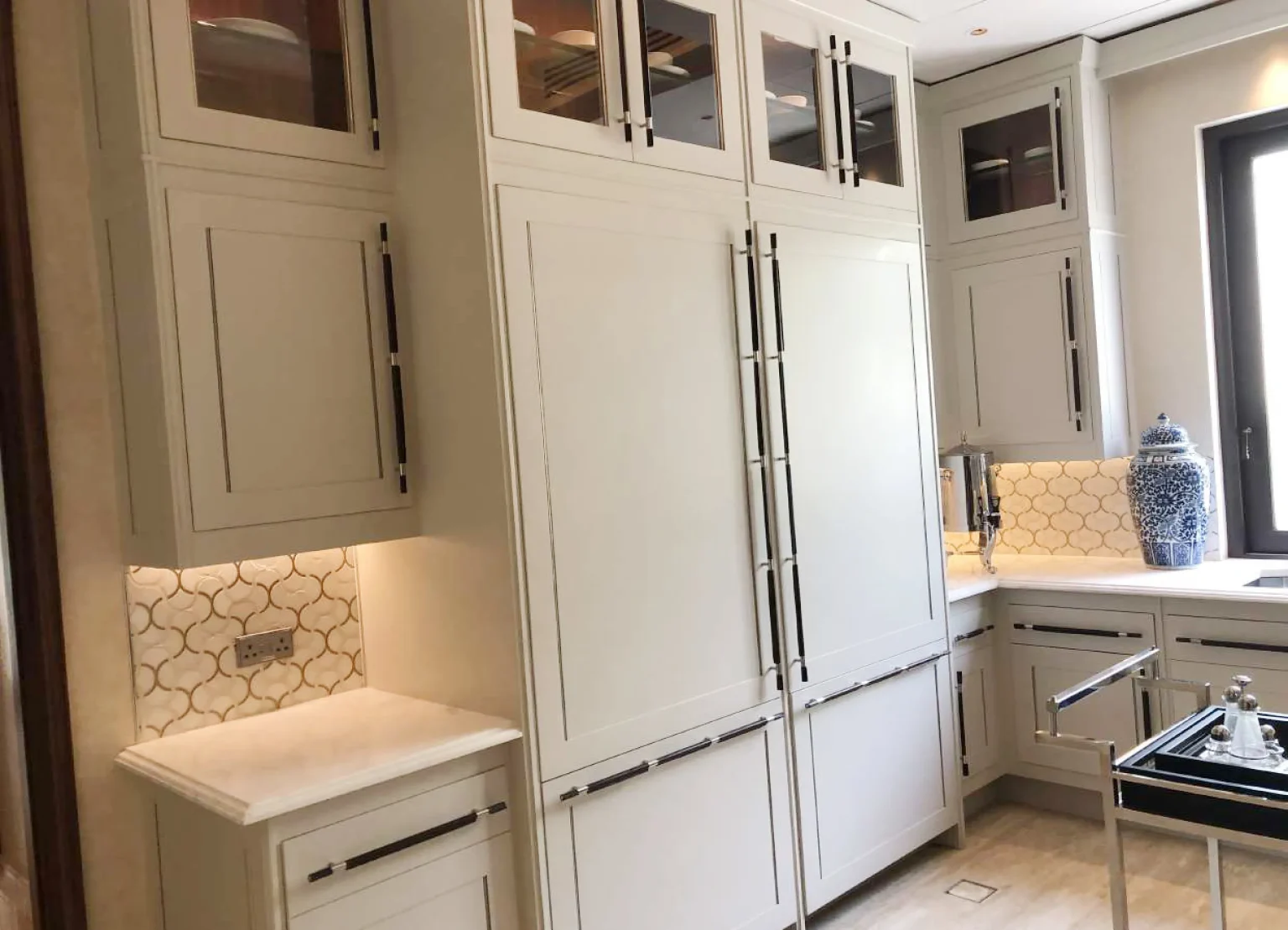
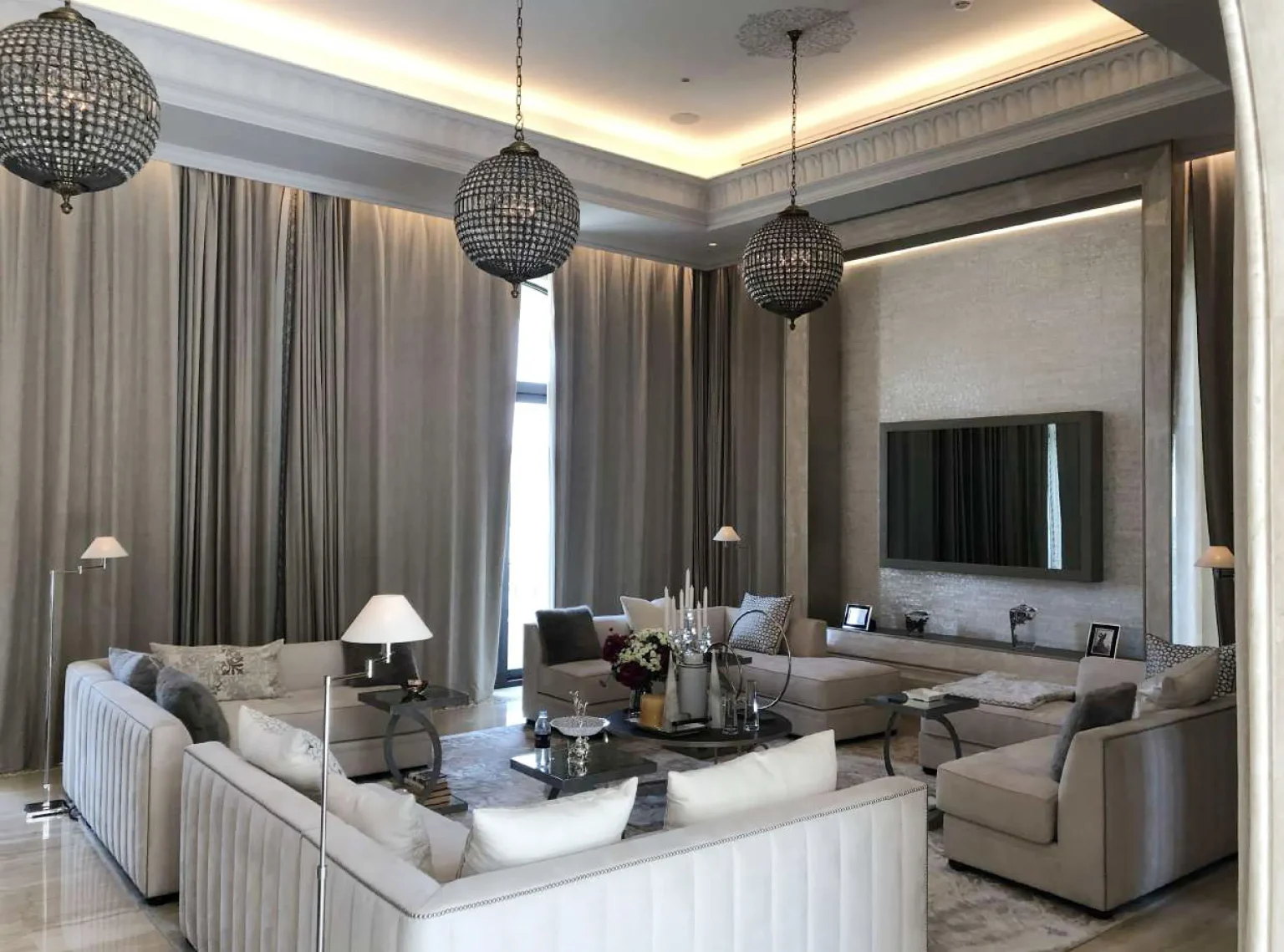
Residential: fitted wardrobes, kitchen cabinetry, sofas, beds, TV units, and full villa furniture packages across communities like Dubai Hills, Emirates Hills, Arabian Ranches, and Palm Jumeirah.
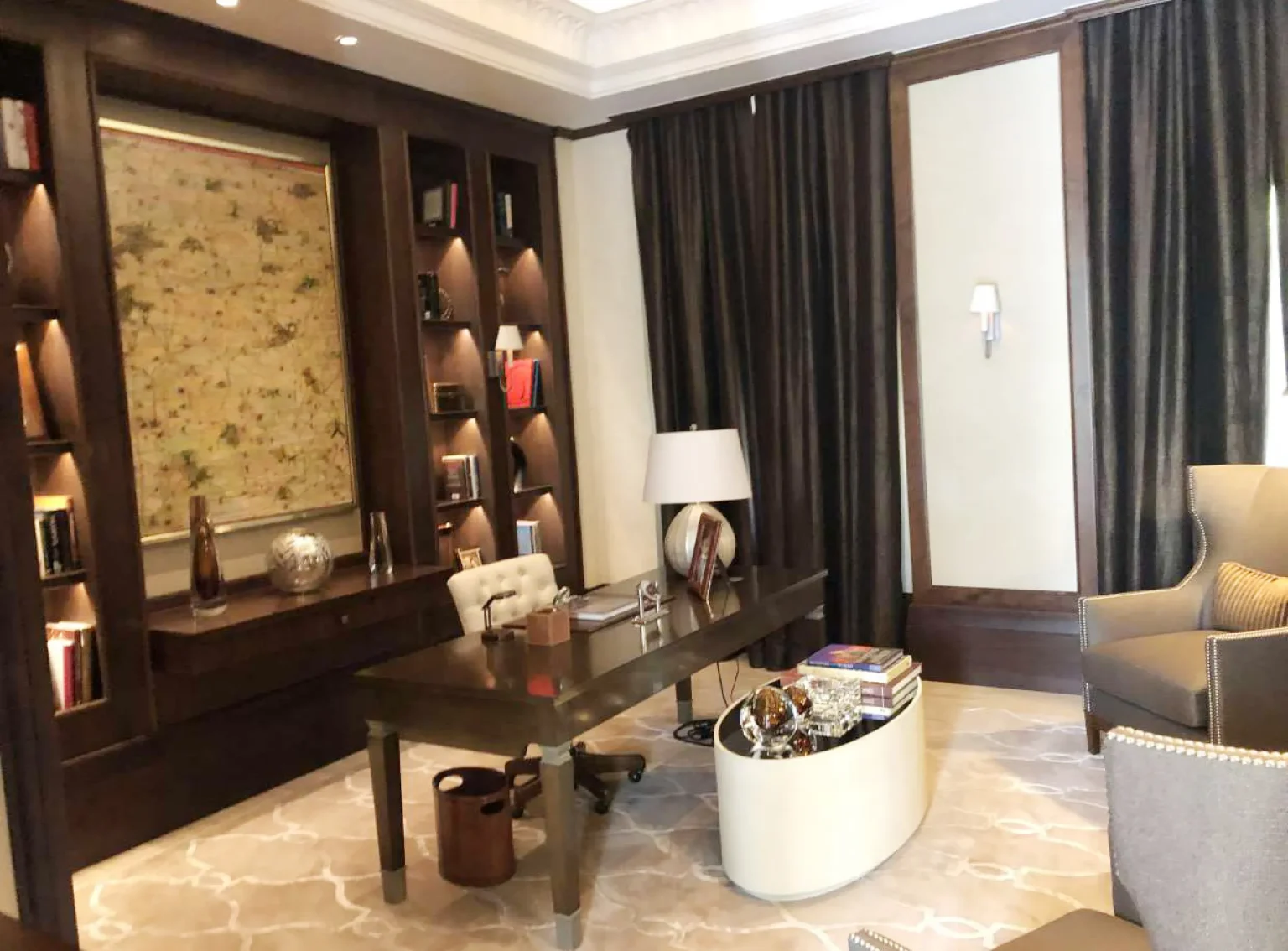
Commercial and office: workstations, executive desks, reception counters, and meeting room tables for corporate fit-outs in Business Bay, DIFC, and JLT.
Hospitality and F&B: restaurant seating, hotel casegoods, bar counters, and cinema seating built to withstand heavier daily use than residential pieces.
Retail: display units, checkout counters, and fixtures built to mall landlord specifications and turnaround windows.
Healthcare: clinic reception furniture and joinery finished with non-porous, easy-to-clean surfaces suited to infection-control requirements.
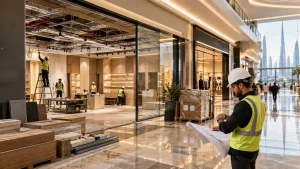
Most of these projects also involve custom joinery work that ties directly into the surrounding fit-out, which is why furniture manufacturing and interior fit-out are usually planned together rather than as separate contracts.
Custom Furniture Cost in Dubai: Real Price Ranges
Prices vary by material grade, hardware brand, and finish complexity, but as a working guide for Dubai in 2026:
| Item | Typical Range (AED) |
|---|---|
| Fitted wardrobe (per linear metre) | 1,200 – 3,500 |
| Fitted kitchen (full unit, mid to high spec) | 15,000 – 60,000+ |
| Custom sofa | 3,500 – 12,000 |
| Office workstation (per desk) | 800 – 2,500 |
| Executive desk | 3,000 – 9,000 |
| Restaurant/hospitality seating (per cover) | 2,000 – 6,000 |
| Full villa furniture package | 150,000 – 500,000+ |
The biggest swing factors are hardware brand (Blum or Hettich hinges and runners cost more than unbranded alternatives but last significantly longer), solid wood versus laminate or veneer, and whether upholstery uses linen and boucle or full-grain leather. If you are comparing quotes and the numbers do not line up, our guide on how to read a fit-out quote explains exactly which line items low bidders tend to strip out.
How Long Custom Furniture Manufacturing Takes
- Single pieces (a wardrobe, a sofa, a desk): 2 to 4 weeks
- Fitted kitchen or wardrobe suite: 4 to 6 weeks
- Full villa furniture package: 8 to 14 weeks
- Commercial or retail rollout: 6 to 12 weeks, depending on unit count and site access windows
Commercial timelines are frequently squeezed by mall or landlord handover dates rather than manufacturing capacity itself; our breakdown of a retail fit-out timeline shows where those delays usually originate.
UAE Regulations That Affect Custom Furniture Projects
Furniture does not exist in a compliance vacuum once it enters a commercial space. Hospitality and F&B seating, upholstery foam, and fabric often need to meet Dubai Civil Defence fire safety requirements, referencing standards like BS 476 or EN 13501 for flame spread and smoke generation. Commercial fit-outs inside a leased unit typically require a Dubai Municipality or free zone authority NOC before installation work begins, and projects inside JAFZA or similar zones go through Trakhees approval instead. Gated communities such as Emaar or Meraas developments also enforce their own fit-out manuals that can restrict finishes, colors, or structural fixings for built-in furniture. A manufacturer with construction and planning and engineering capability in-house can flag these requirements during design, not after the furniture is already built.
Working with a Designer vs Going Direct to the Manufacturer
Interior designers add real value on concept, spatial planning, and sourcing across multiple suppliers, which suits projects still shaping their overall look. Going directly to a bespoke furniture Dubai manufacturer suits buyers who already know what they want and prefer one point of contact for design, fabrication, and installation, usually at a lower total cost since there is no separate design markup layered on top of production.
How to Choose a Custom Furniture Manufacturer in Dubai
- Ask to see the actual factory floor, not just a showroom.
- Request a shop drawing before production, not just a render.
- Confirm hardware brand in writing, not just “premium hardware.”
- Check warranty length and what it actually covers.
- Ask who handles Civil Defence or municipality approvals if the project needs them.
- Get a single point of contact for design, manufacturing, and installation.
Ready to Start Your Custom Furniture Project?
Whether it is a single fitted wardrobe or a full villa, office, or hospitality furniture package, CHIHU Group designs, manufactures, and installs everything in-house from our Dubai factory. Book a free consultation and get a real quote, with real drawings, within 24 hours.
Frequently Asked Questions
What is the difference between a furniture manufacturer and a furniture supplier in Dubai?
A manufacturer designs and produces furniture in its own factory, controlling material sourcing, joinery, and finishing. A supplier or trading company typically resells furniture made elsewhere and offers limited customization such as fabric or color changes only.
How much does custom furniture cost in Dubai?
Costs range from around AED 800 for a single office workstation to AED 500,000 or more for a full villa furniture package, with material grade and hardware brand as the biggest cost drivers.
How long does custom furniture manufacturing take in Dubai?
Single pieces typically take 2 to 4 weeks, fitted kitchens or wardrobe suites take 4 to 6 weeks, and full villa packages or commercial rollouts take 8 to 14 weeks depending on scope and site access.
Do I need approvals for custom furniture in a commercial unit?
Yes, in most cases. Hospitality and F&B furniture often needs to meet Dubai Civil Defence fire safety standards, and installation inside a leased commercial unit usually needs a municipality or free zone NOC.
Can a custom furniture manufacturer also handle the surrounding fit-out?
Yes, when the manufacturer also offers interior fit-out and construction services in-house, which avoids handoffs between separate contractors and keeps one team accountable for the finished result.
What materials are best for custom furniture in the UAE climate?
Moisture-resistant MDF, marine-grade plywood, kiln-dried solid wood, powder-coated metal, and UV-stable fabrics perform best against Dubai’s humidity, heat, and constant air conditioning.